Have you ever thought about what the nylon density is? More than just a number, nylon density is a microcosm of the material's performance. Let’s learn about it together and make your material selection more effective.
content
Nylon density is a fundamental physical property. It defines mass per unit volume, with standard units of g/cm³ or lb/in³.
This value directly determines molecular packing density. Higher density indicates tighter molecular structure and heavier weight, while lower density means a looser structure and lighter weight.
The density of common nylon ranges from approximately 1.01 g/cm³ to 1.15 g/cm³. It is heavier and stronger than most plastic bottles and containers we see every day (PP/PE). The moderate density makes it strike a balance between strength, toughness, and weight. By the way, this is one of the reasons why it is widely used in our everyday products, automotive parts, and even aerospace components.
Now, let's take a brief look at the density of common nylon and its applications
| Nylon type | Density (g/cm³) | Simple description | Application |
|---|---|---|---|
| Nylon 6 (PA6) | 1.12 - 1.14 | The simplest nylon with great toughness, which allows it to be processed easily. | Nylon spinning, including staple fiber for carpets or brushes; filament yarn for high-end costumes or fishing line |
| Nylon 6/6 (Nylon 66, PA66) | 1.13 - 1.15 | Used as engineering material, with strength, rigidity and heat resistance superior to Nylon 6. | New energy vehicle battery module structural parts, drone propellers |
| Nylon 12 (PA12) | 1.01 - 1.02 | Lowest density, light weight, excellent flexibility and very low water absorption. | Automobile wiring harness protective cover, battery cooling pipe, artificial turf |
| Nylon 66 GF30 (PA66+GF30) | 1.35 - 1.37 | The strength and rigidity are extremely high, and the density is significantly increased. | Engine hoods, industrial housings |
| Nylon 46 (PA46) | 1.17 - 1.19 | High temperature resistant nylon, with very high heat deformation temperature and density slightly higher than Nylon 66. | New energy vehicle battery thermal management components |
I will put the conversion between metric and imperial units below to facilitate your calculations.
1 g/cm³ ≈ 0.0361 lb /in³

In most condition, high-density nylon often means higher strength, greater rigidity, and better impact resistance, while low-density nylon is more flexible, lighter, and can resist fatigue better.
Nylon's high density is particularly evident in nylon spinning. Through the directional stretching process, it can be made into industrial filaments with a specific strength (i.e. strength/density) far exceeding that of steel, which is used to manufacture parachute ropes, safety harnesses and other equipment.
High-density nylons usually have better heat stability, which means they are less likely to lose their shape or soften at the same higher temperature.
For example, Nylon 46 can work normally for a long time at temperatures as high as 170 °C, making it an excellent raw material for battery thermal management components of new energy vehicle; while Nylon 12 tends to lose its shape when working for a long time at above 100 °C, so be sure not to use this material at high temperatures for a long time.
Nylons of different densities absorb moisture differently, which affects their size and strength.
Low-hygroscopic Nylon 12 (in standard environments, its moisture absorption rate is approximately 0.5%) can provide higher precision and stability of size. For artificial turf, using nylon with low moisture absorption as grass fibers can ensure that it can quickly drain water and maintain dimension stability in humid and rainy outdoor environments, and maintain bright colors and an upright appearance for a long time, greatly extending its service life.
When you need to reduce weight of your design, use lower-density Nylon 12 or Nylon 610.
Their low density not only reduces weight but also makes them easier to process. This is particularly important in the field of new energy vehicles, as every gram of weight saved represents a potential increase in range. Furthermore, this lightweight design philosophy has been pushed to its extreme in the aerospace sector. Whether it's drone rotors or satellite components, the pursuit of extreme specific strength in material selection has given low-density, high-strength carbon fiber-reinforced nylon a prominent position in this field.
If the target requires high rigidity or must maintain a precise shape, such as in the battery pack of new energy vehicles, where a strong frame is needed to secure the battery cells to withstand shock and vibration, your first choice is reinforced nylon, such as Nylon 66 GF30.
Glass fiber or carbon fiber is like countless tiny bones embedded in nylon, which increases its strength, rigidity and heat resistance exponentially, making it shine in the construction of aerospace-grade fasteners, drone bodies and other structural skeletons.
For some components that need to work for a long time in a high-temperature environment, such as components close to the automobile engine or around the high-power drive motors and electronic control systems of new energy vehicles, the heat resistance of the material directly determines its lifespan and reliability.
Nylon 46's molecular structure is inherently more stable, and its long-term operating temperature is very high, making it very suitable for building components in high-temperature environments; while Nylon 66 GF30 is reinforced with glass fiber, which significantly increases its heat deformation temperature, allowing it to withstand extremely high temperatures in a short period of time, and has outstanding cost-effectiveness.
Nylon density is a parameter that is easily ignored in materials engineering, but this number represents many properties and functions of nylon, such as weight, toughness and strength.
Understanding and applying density data can be your first step to accurate material selection and quality control.
Density variation stems from inherent molecular structure differences and additive composition. Subsequent processing and artificial additives can significantly affect density. For example, by adding glass fiber, people increase the density of nylon to make it stronger and be more suitable for high-end industry like aerospace Industry (e.g., Nylon 66 GF30).
Reinforced nylon is an artificial material that is made by adding fibers or minerals to the nylon structure, thereby significantly improving its performance and making it more suitable for us to apply it. For example, in the Nylon 66 GF30 we mentioned earlier, “GF30” indicates 30% mass fraction of glass fibers. Also, you can choose mineral fillers for dimensional stability, carbon fibers for conductive properties, or hybrid systems for multi-attribute optimization.
Absolutely not. Density is an excellent selection parameter, but the final decision must be made based on a balance of factors such as chemical resistance, long-term temperature resistance, abrasion resistance, and cost. Density can be your starting point, not an end point.
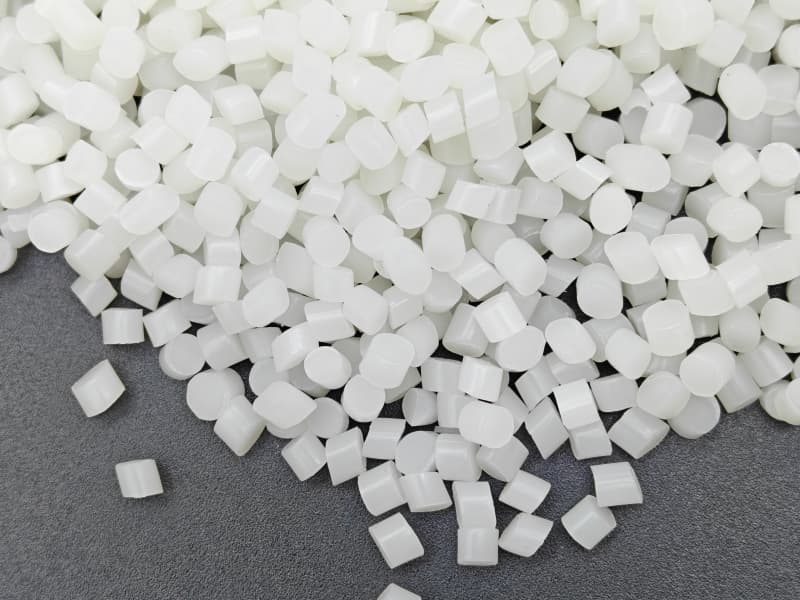
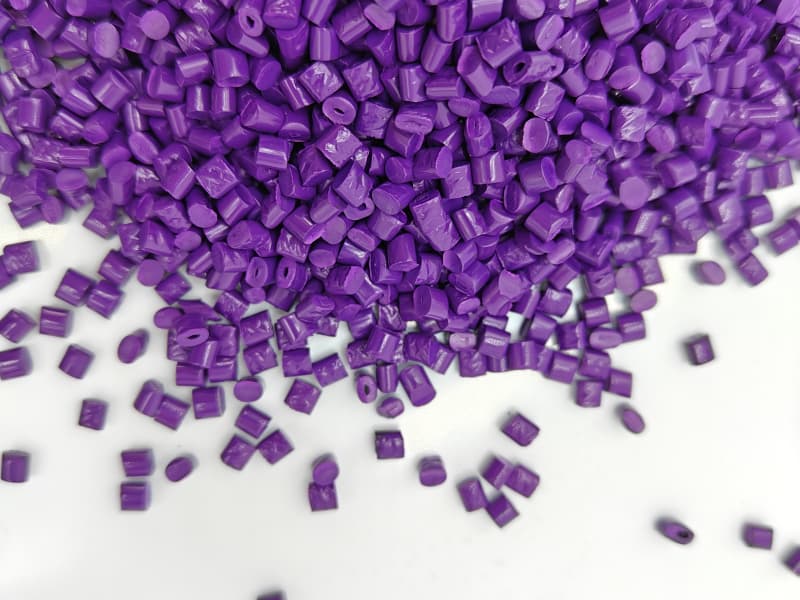
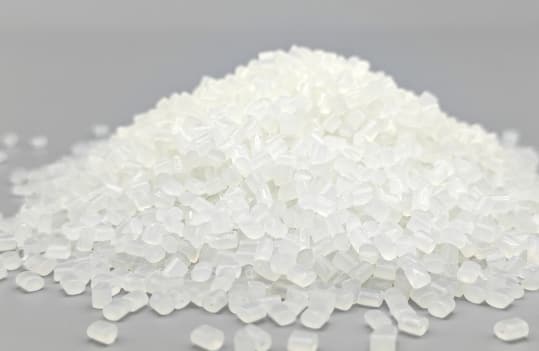
Nylon masterbatches (PA masterbatches) are generally classified into four types: pure nylon, color nylon (black nylon, white nylon, etc.), and functional nylon masterbatches.
Each of them has different functions: black and white nylon masterbatches have excellent hiding power and thermal stability; color nylon masterbatches provide vibrant color; and functional nylon masterbatches can improve nylon’s properties, such as weather resistance and antistatic performance.
Whether it's modified nylon or nylon spun yarn (filament and staple fiber), Standard can provide you with customized black colour master batch, white color master, red colour masterbatches, blue masterbatch, purple color, yellow colour masterbatch, and other color masterbatches. We can also offer customized solutions such as antibacterial MB, flame-retardant MV, and matting additives, etc.
Standard has 15 years of experience in the masterbatch industry, a 50-year-old formulation system, and a US-based management model.
Contact us now for free samples and technical support.