No Standard Color? How to Choose Colors and Match Masterbatch for Plastic Products
Now you need to create an entirely new non-woven textile material, film, housing for plastics, cosmetic packaging, or other industrial products. All the preparation work has been done except for the color choice. However, now everyone notices: we don’t even have our own color standard! There is not even a custom color board, let alone any precise color formula. Sometimes you can receive from your client only the following description: “I want a high-end slightly technical dark blue.”
Given such circumstances, how should you select and match the best color and masterbatch for that?
But if I don’t have my color standard, how should I select my color? This problem occurs every day to thousands of buyers of plastic products, product managers, and color engineers when starting a new project. You may determine your target color despite lacking color standard by using the right color conversion methods and selecting masterbatch according to certain rules.
What Is Masterbatch Color Matching?
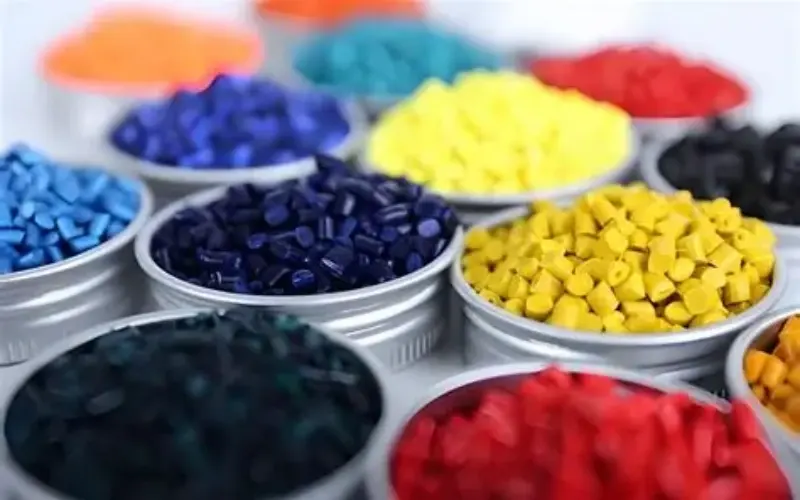
The master batch color matching technique involves the practice of the industry in terms of coloring wherein there is an excess inclusion of the pigments, dyes, and other functional additives to a particular resin matrix, followed by its mixing with base plastic resins like PE, PP, ABS, and others in a particular ratio (usually 1%-4%). This generally needs modifications in the formula by a master batch manufacturer.
I. No Color Standard? These 6 Standard Color Systems Will Help You Break Through
When you do not have a physical plastic color standard on hand, the most scientific first step is to “bridge-convert” using mature color standards from other industries. No matter which master batch supplier you ultimately contact, the following color systems are the industry’s common language.
1. Pantone Color Guide (Pantone Color System)
Pantone is the most widely accepted color language across the globe. When it comes to plastics coloration, we generally follow two methods:
Pantone Formula Guide (C/U): This is a color guide on paper, which comes from the printing industry. Due to its popularity, it is generally taken up as the first mode of communication when it comes to color selection of plastics. But, due to differences in the light transmittance capabilities between paper and plastic, it may be taken up only as a direction indicator.
Pantone Plastics Selection System: It comprises of color chips that are made exclusively for plastics (normally printed on PP/PS substrates).
2. RAL Color Chart (RAL Classic)
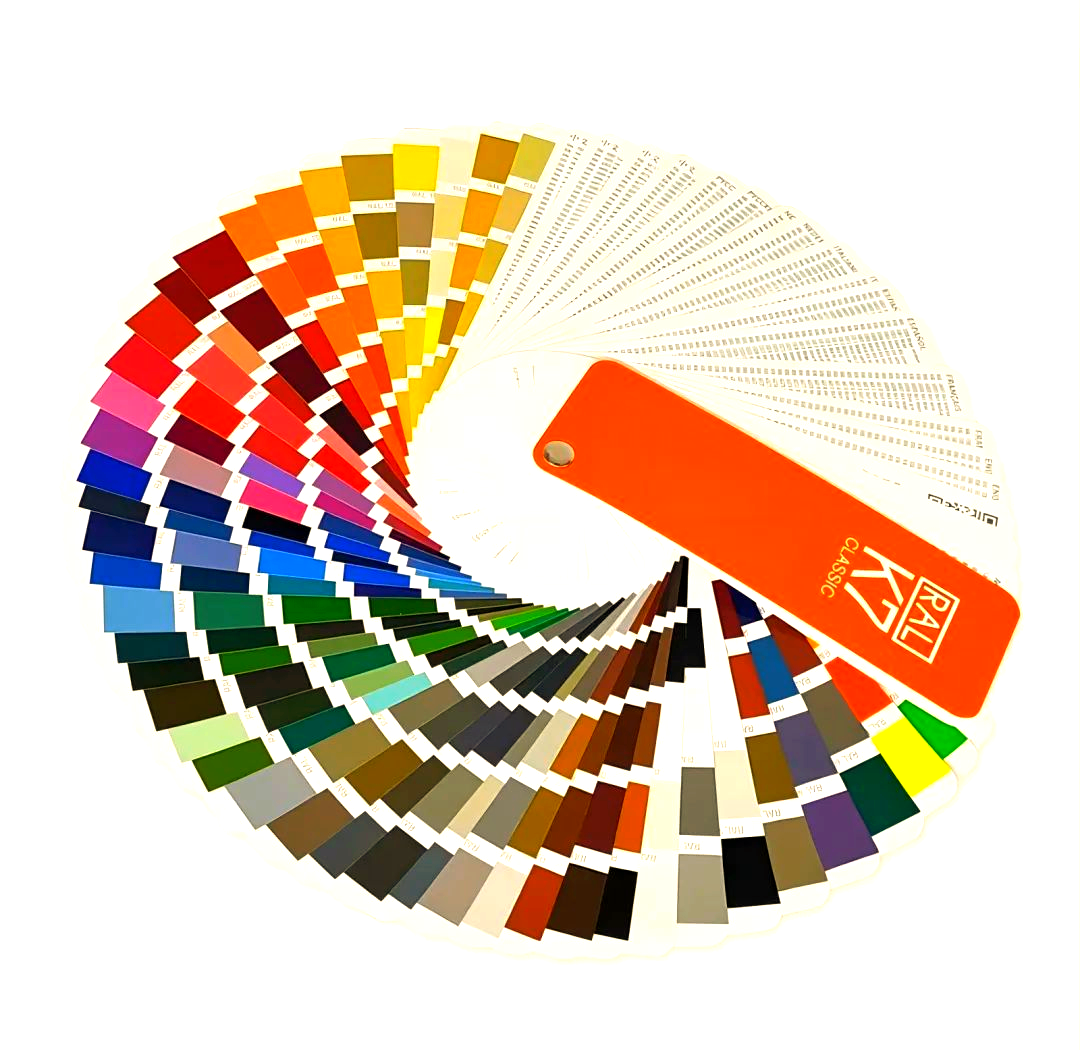
Color Standard for Industries in Germany. If your plastic items are part of the industrial equipment, piping systems, or construction panels, RAL should be your first preference. The classification is very strict, and you will be able to give precise color matching while making a quotation for the master batch.
3. CMYK Color Model
A four-color printing method that forms the picture by overlapping cyan (C), magenta (M),
yellow (Y), and black (K) inks in dots.
Note: CMYK relies on reflected light. While it is widely used in graphic design, relying directly on CMYK color values to achieve masterbatch color in plastic can result in mistakes. This is because plastic is a three-dimensional object and its pigments are dispersed in resin, which differs from paper.
4. RGB Color Model
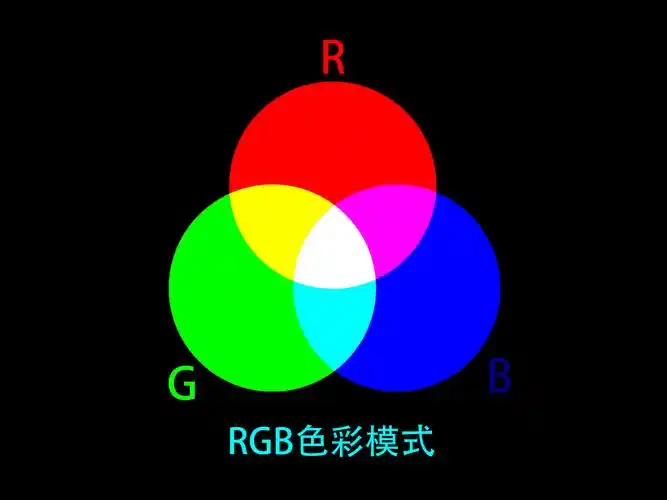
Screen display mode generating color through the combination of three primary colors of light, namely red (R), green (G) and blue (B).
Pitfall to Watch Out for: Due to the fact that every monitor and cell phone display uses a unique color calibration method, the biggest reason for a color mismatch is “choosing plastic colors from screen photos”. An RGB picture may appear as an elite gray on your iPhone and become a dark green on the master batch factory computer.
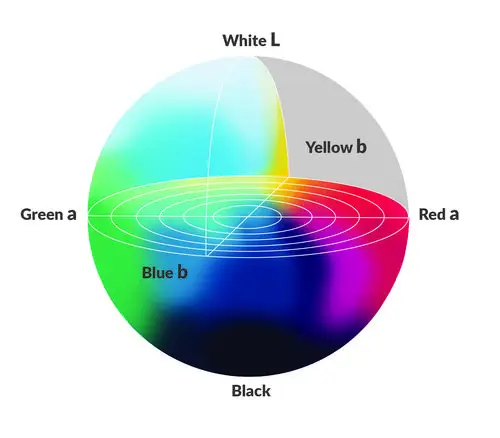
5. Digital Lab Color Space: CIE $L^*a^*b^*$
This is the most authoritative digital standard during the Quality Control process in masterbatch production.
$L^*$ is for lightness (Black to White).
$a^*$ is for the red-green axis (Green to Red).
$b^*$ is for the yellow-blue axis (Blue to Yellow).
Based on color measurement, using a spectrophotometer, we get the $L^*a^*b^*$ value of the plastic sample, which is used to calculate the total color difference, $\Delta E^*$. The typical requirement in automotive plastic or premium electronics packaging is that $\Delta E^* < 0.5$.
6. Physical Sample Reference Method (Cross-Material Borrowing)
However, if you lack a color card, then there is an existing physical sample that will have the right color to satisfy your requirements.
For instance: A cosmetic
bottle cap of a popular brand, automotive interior parts, or even a common anodized aluminum alloy sheet. The physical sample is given to the supplier and by the help of a color masterbatch specialist, the right color will be matched using a colorimeter machine.
II. Scenario-Based Color Selection: Working Backward from Product Application
This is quite clear because, In case of lack of a subjective aesthetic judgment, the use situation of the product, its materiality, and its commercial interest become the most objective standards to determine the colors. The reverse approach is required by starting from the particular working situation of the product.
1. Material Compatibility: The Base Color and Transparency of the Plastic Itself
But before picking out a color, you need to know what the plastic substrate that you use is.
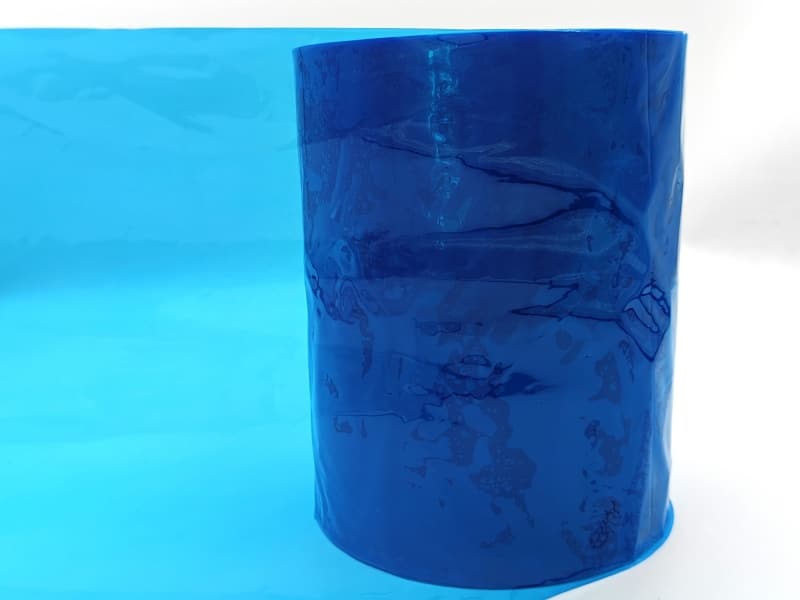
For High Clarity Resin (e.g., PET, PC, PMMA): If you want your products to remain transparent, you have to indicate dyes instead of pigments for your colors. Some examples would be sapphire blue and amber.
For Resins with Inherent Base Color (e.g., ABS, PA nylon, filled modified plastics): ABS has a faint yellow tint, whereas PA has a milky white tint. With this kind of resin, there’s no way you can have an ultra-pure fluorescent and pastel color. What you can do here is pick up some dark colors with high hiding power and metallic colors.
2. End-Use Conditions: The Weather and Temperature Bottom Line for Color
Color does not exist in isolation. It has to survive in a specific physical environment.
| Plastic Application | Recommended Color Direction | Technical Requirements (with additive masterbatch) |
| Outdoor Building Materials / Garden Tools | Forest green, earth tones, light gray, beige | Must use inorganic pigments with lightfastness rating of 7-8, combined with UV stabilizer additives to prevent outdoor UV degradation and fading. |
| Premium Cosmetics Packaging / Containers | Pearl white, metallic silver, matte black, custom pink | Focus on surface flow mark control. Requires a custom, high-quality color master batch solution, and must comply with RoHS and REACH directives. |
| Electronic and Electrical Housings (PC/ABS) | Tech white, carbon black, titanium gray | Pigments must not compromise the resin’s flame retardancy. The masterbatch carrier must be strictly matched to the substrate’s MFI (melt flow rate). |
| High-Temperature Injection Molded Parts (e.g., PA66 Auto Parts) | Dark colors, industrial blue, black | Color selection must avoid heat-sensitive organic pigments. If you need a pure black, you must work directly with source black masterbatch manufacturers to ensure the carbon black does not degrade at high temperatures. |
III. From Color Selection to Color Matching: The Standard Industrial Workflow with a Masterbatch Factory
And the best part is that: You do not need to be a chemist in order to make your color work well. Now when you know how to choose the color by means of the methods described above, the next step is to follow the standard process in the industrial sector and make sure your color works well.
Step 1: Provide Substrate Information: Do not just say to the factory "I need a red." You should always provide them with exact information about the plastic grade (for example, Chi Mei ABS-757) and processing method (is it
injection molding, blow molding, extrusion, or cast film?).
Step 2: The Masterbatch Factory Will Produce First Sample: A professional masterbatch factory will make injection molded chips on a small lab machine according to your samples. Make sure you always ask for stepped chips (Stepped Chips) with thickness gradient variations.
Step 3: Color Evaluation in the Standard Light Source: When your color chips arrive, do not evaluate the color with normal office fluorescent light. You should always evaluate your colors in the standard color matching light box (for example, D65, TL84 light sources).
IV. Industry Expert Pitfall Guide: Avoiding 4 Hidden Traps in Mass-Production Color
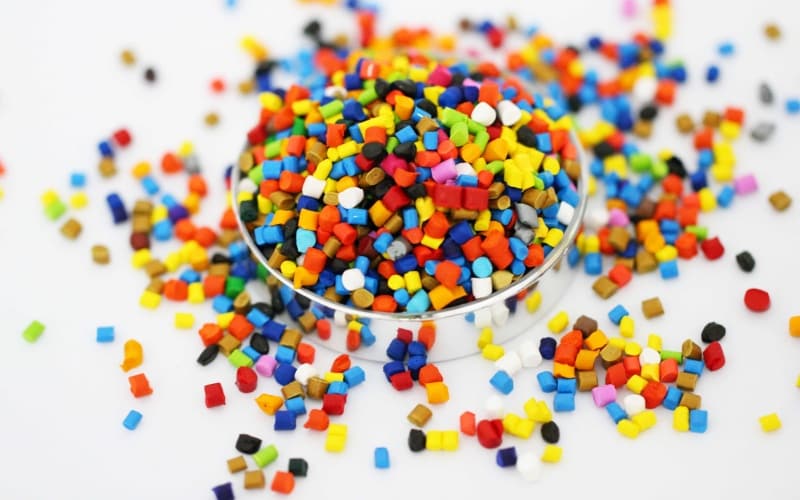
From our hands-on experience with production of black masterbatch and polymer color masterbatch, the below mentioned four things will help you determine if your product is “premium industrial” or “cheap and low end”:
1. The Commercial Trap of Ignoring the Masterbatch Let-Down Ratio
Some customers pay attention to the cost per kilogram while seeking quotation. It causes many failures.
Low-concentration masterbatch: Cheaper per kilogram, however, needs an addition rate of 4% - 5%.
High-concentration masterbatch: More expensive per kilogram, however, needs 1% - 2%.
An excessive addition rate causes a large amount of the carrier resin to be added to the plastic mixture. It is easy to destroy the qualities of the basic plastic (makes it brittle, for example). A very small addition rate may cause feeding problems at non-precise feeders. 2% - 3% works perfectly.
2. The Devastating Effect of Recycled Plastic on Color Selection
If the recycled material you are using is PCR or factory regrind, forget about picking light-colored hues or high-saturated hues (like brilliant yellow, pure white, and pastel blue).
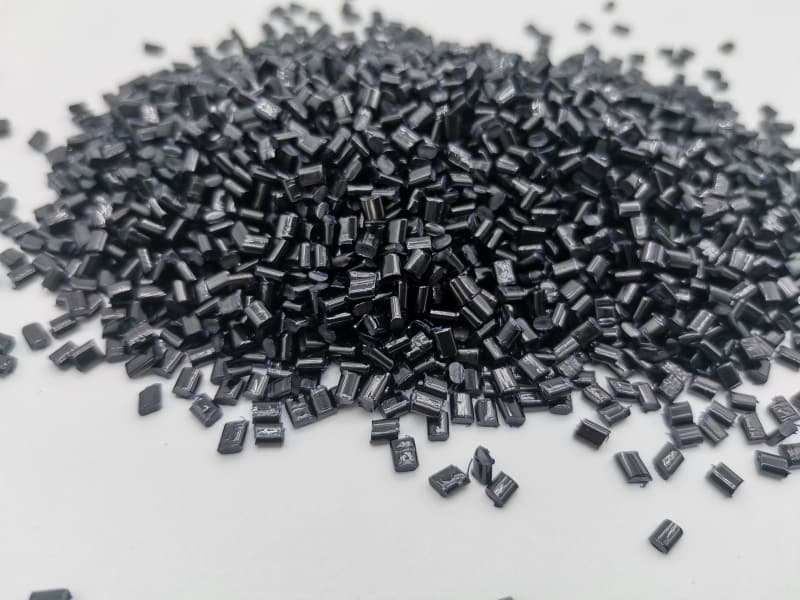
The best option for recycled materials would be to select “forgiving” dark hues. In this scenario, your ideal source would be a masterbatch provider to supply a customized black masterbatch or a dark color masterbatch that could mask the base hue imperfections due to the raw material.
3. Weld Lines with Pearlescent and Metallic Colors
For instance, if your product made from plastic has several gates for injecting or structural holes such as in remote control casing, your pursuit of "luxury gold" or "pearl white" in color choices will definitely bring about the formation of the weld line where the melt meets at the end of injection molding. For complicated products, we suggest that you avoid pearlescent pigments in large particle size and opt for ultra fine powder instead.
4. Chemical Interference from Additives on Color
Color is not the only feature that many plastic products require; they must also have some kind of function. While some types of UV stabilizers may react with some organic pigments in hot temperatures, resulting in yellowing of the plastic a few days after injection molding, the best way of designing functional plastics is by mixing color and functional additives into a single masterbatch.
V. Advanced FAQ for Procurement and Production (Concise Technical Edition)
In order to fulfill the high-standard requirements of procurement, we present 10 important technical questions, which will be most frequently raised at the production line and in business talks. The text below is the additional information to the main text.
Q1: If there is absolutely no sample, how should I utilize digital data for placing an order with a masterbatch supplier?
A1: The recommended procedure is to utilize a spectrophotometer to define the absolute CIE $L^*a^*b^*$ target values. Provide the set of ideal values into your contract and define the acceptance criterion (for example, $\Delta E^* < 0.5$ under D65 illumination source), thus eliminating any possibility of subjective visual color evaluation.
Q2: Why does my color chip produced by masterbatch manufacturer looks good, but the color varies while producing the product on my own injection molding machine?
A2: It concerns “processing induced color variation”. There are two possible reasons: firstly, the production injection molding machine is characterized by high screw shear force, leading to better dispersion of pigment and color variation. Secondly, incorrect barrel temperature control on the injection molding machine causes hot spots, where some pigments start to degrade due to heat and change their color.
Q3: How can you assess the opacity of a masterbatch in thin-walled plastics such as packaging bottle caps while selecting colors?
Answer: A high level of attention should be paid to the opacity parameter while selecting colors in thin-walled plastic products. The hiding power of inorganic pigments (titanium white and carbon black) is much higher than that of organic pigments. While performing the assessment, you can use a color chip over a standard black-and-white test chart and measure the light transmission.
Q4: Black plastic products have no distinctive color. Does it mean that I am free to purchase the cheapest black masterbatch?
Answer: That is your blind spot. There are two undertones of black masterbatch – cool black (blue tint, more profound and expensive look) and warm black (yellow tint, looks like cheaper one). In addition, the random purchase of inexpensive black masterbatch may lead to an excessive amount of PAHs (polycyclic aromatic hydrocarbons) content. You need to select black masterbatch suppliers.
Q5: Why is the same masterbatch formula showing up in such a dissimilar appearance on the PP and ABS substrate?
Answer: It is about the optical property of the polymer material. PP is a semi-crystalline polymer. The crystalline region inside the polymer leads to light scattering, and hence results in a milky appearance of the polymer. ABS is an amorphous polymer, but with a slight ivory-yellow base. Since the base color of the substrate is different, the carrier of the masterbatch must be “substrate specific.”
Q6: While selecting and matching colors, how do you quickly determine whether the masterbatch would “warpage” large areas of injection molding products?
Answer: Warpage is closely related to the pigment's impact on polymer crystallization, especially in semi-crystalline resins like PE and PP. Certain organic pigments (like Phthalocyanine Blue/Green) act as nucleating agents, altering crystalline shrinkage rates and inducing warpage. To quickly evaluate this, request a differential scanning calorimetry (DSC) test or shrinkage rate comparison test from your supplier before volume manufacturing.