If you run a:
Blown film line
Cast film line
Masterbatch plant
Compounding facility
You've probably heard this term lately: PFAS Free PPA Masterbatch
Here's the problem: Conventional fluoropolymer PPA has been in the market for more than 10 years now. But you have to do away with the use of fluoride.
Most people’s questions once you talk about it:
“Would it reduce my production?”
“Does it still remove shark skin?”
“Will there be die build up?”
“Is it more expensive?”
So if you have those same questions. Then let us give you insight on:
✅ What is PFAS Free PPA?
✅ Why the whole world needs PFAS replacement
✅ How does PFAS Free PPA work?
✅ What are its suitable films?
✅ How to select one solution
PFAS-Free PPA Masterbatch is a polymer process aid which does not contain any fluoropolymers.
This product improves the melt flow properties, lowers the die friction and increases extrusion speed, all without any regulatory concerns associated with conventional fluorinated PPA.
The analogy would be this one:
Conventional PPA works much like applying Teflon coating to the die.
PFAS-Free PPA is more about improving the design of the melt flow pathway through the die.

For the past 20 years, PPA products depended on fluoropolymers. And for good reasons too — they did the job perfectly.
For example in the following applications:
LLDPE
mLLDPE
HDPE
Metallocene PE.
But there was a downside to that. These chemicals were dubbed: Forever Chemicals
Why? Because they hardly decompose naturally.
Several nations and regions around the world have already banned or limited some PFAS uses. For businesses wanting to export their goods to Europe and North America, saying PFAS Free is no longer optional.
Many people know what PPA is. But not many are aware of its function. Based on our experience dealing with manufacturers of blown film, PPA addresses four main problems:
Sharkskin: Surface becomes uneven similar to that of an orange peel.
Material builds up on the die lips.
The melt surface cracks and tears.
You hit a wall and can't push output any higher.
Without PPA, a lot of high-speed blown film lines simply can't run.
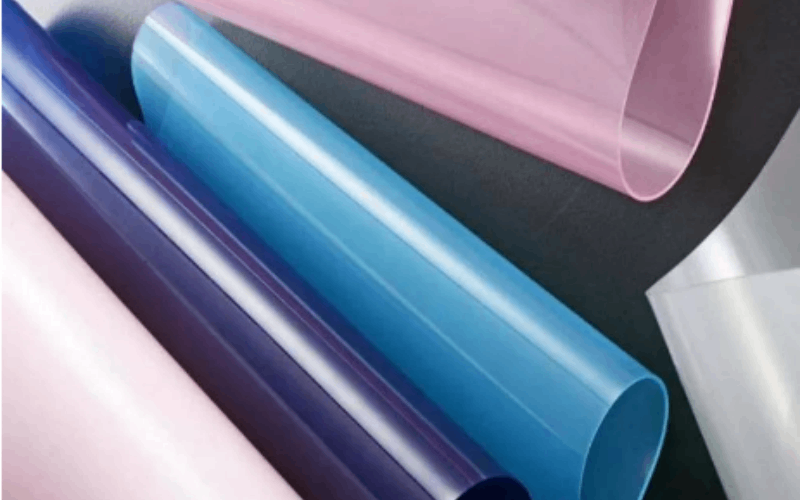
This is the answer many engineers would love to have. Let me explain:
The mechanism for the regular PPA involves migration of fluoropolymers to the metal surface, thus forming a lubricating film. Now PFAS free PPA does things differently.
Current technical options that exist:
Functional Polymer Technology
Hyperbranched Polymer
Silicone Based Processing Aid
Specialty Copolymer Systems
Every supplier has their unique technology. However, the objective is the same: Reduce the friction between the melt and the die.
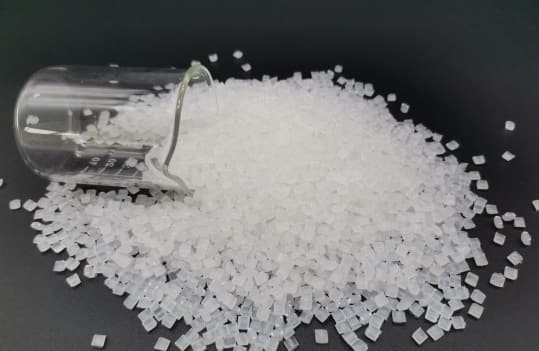
That's why more and more large film producers are starting to switch to PFAS Free PPA.
Blown Film
It is the largest field at present. Key innovations:
Shark Skin
Die Deposit
Surface Finish
Cast Film
Improved surface finish. Less deposit accumulation in the die.
Agricultural Film
Maintains constant production throughout long runs. Less need for stopping to clean the die.
Protective Film
Less gel formation.
It is one of the most popular myths in the industry. Buyers tend to believe all PFAS-Free formulations are equal. However, the difference may be significant.
According to our experience, here are the major factors that make the products different:
Dispersion properties
Concentration of active ingredients
Carrier composition
PE resin compatibility
That is why for the exact same 500ppm dose, the outcomes differ significantly.
This is our number one complaint. The bottom line: It’s feasible.
Here is the thing: Not all systems replace the seals via similar mechanisms. And if your formula isn’t properly designed, during long periods of production, you may observe:
Lip deposits from the dies
Black particles
Contamination
This is because choosing an option tested on the actual production line is crucial.
Here are our suggestions for areas to focus on:
True blown film case histories
Beyond lab results only.
Compatibility with mLLDPE
One of the most difficult resin formulations to work with.
High production rates
Including lines that exceed 500kg/h.
Stability test results
Long term tests are more important than short term.
The industry is moving in a new direction. Previously, Fluoropolymer PPA was standard. Looking ahead, PFAS Free PPA will become dominant. Particularly within the following market segments:
Europe
North America
Food Packaging
Sustainable Packaging
It’s becoming obvious.
Would the use of PFAS free PPA affect film clarity?
Quality products would generally not pose any issues with film clarity.
Could PFAS free PPA be used in food packaging?
That would depend on your local laws.
What is the Standard Dosage?
Typically around 200 to 1000 ppm.
Compatibility with mLLDPE?
Most high-grade products have no problems.
Would it be possible to use PFAS free PPA 100%?
Yes, generally it would, though we would recommend testing it out.
Would it impact heat seal performance?
At proper dosage, it wouldn't cause any problems.
Could PFAS free PPA be used with slip masterbatch?
There shouldn't be an issue though formulating would need to be checked out.
Would it increase die buildup?
Poor quality products might cause that, but good machines shouldn't have a problem with it.
Would it be more expensive than traditional PPA?
While it may cost more per unit, its value has been rising rapidly.