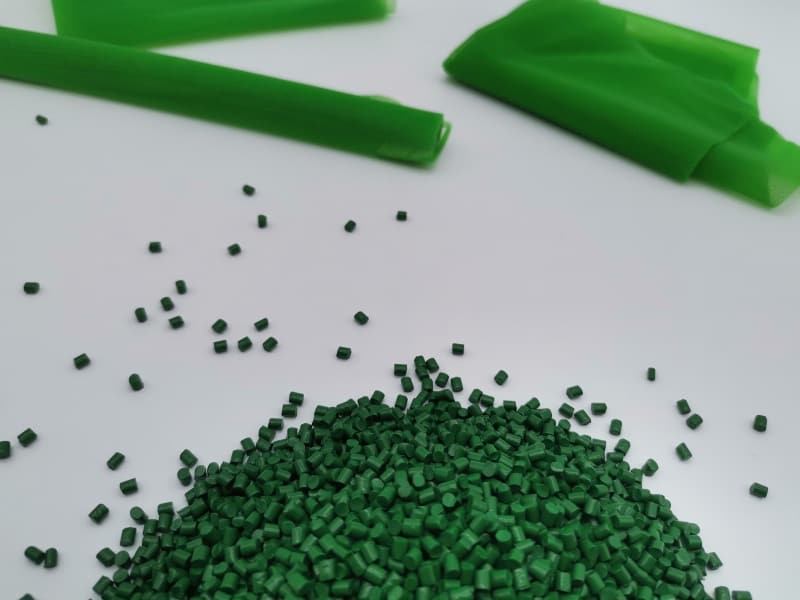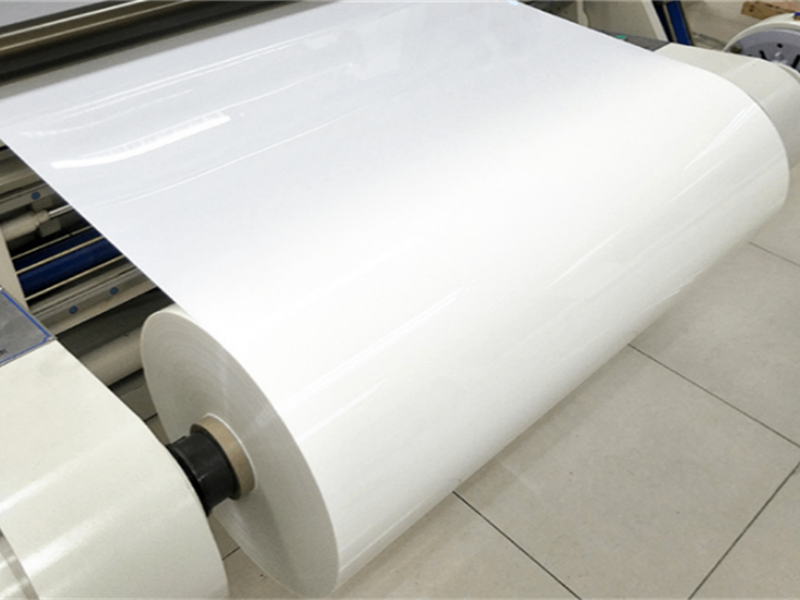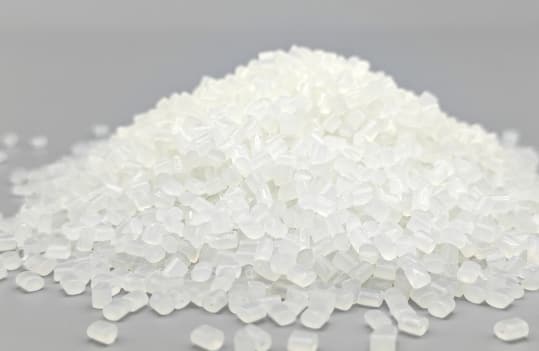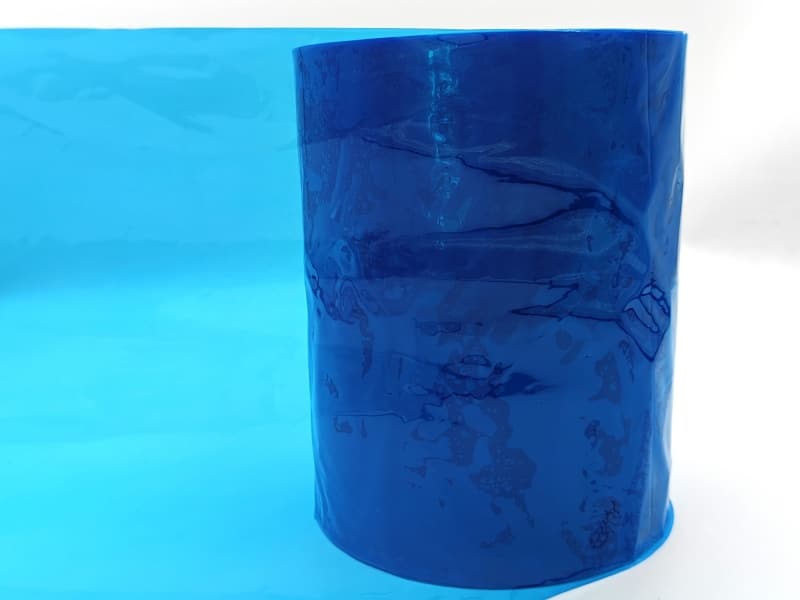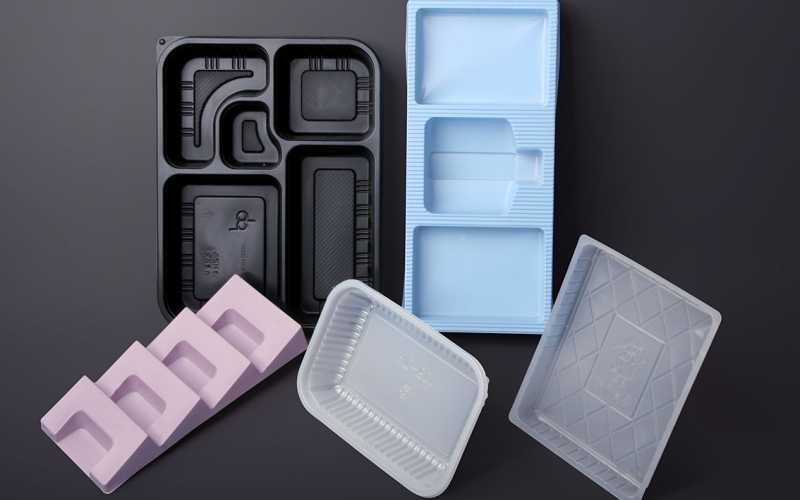
PP cast film and biaxially oriented polypropylene film are two common types of films. Their raw materials are both PP resins, but their performance and applications are very different. This is because they use different types of PP resins and undergo different molding processes to obtain films with huge performance differences.
| Table of Contents |
| 1.Raw material differences |
| 1.1 CPP film raw materials |
| 1.2 OPP film raw materials |
| 2. Production process differences |
| 2.1 CPP production process |
| 2.2 OPP production process |
| 2.3 CPP and OPP thickness control and other performance summary |
| 3. Performance differences |
| 3.1 Mechanical properties |
| 3.2 Heat sealing performance |
| 3.3 Optical properties |
| 3.4 Heat resistance |
| 3.5 Barrier properties |
| 3.6 CPP film and OPP film performance comparison table |
| 4. Film application differences |
| 4.1 CPP film application areas |
| 4.2 OPP film application areas |
| 5.Summary |
| 6. STANDARD in CPP and OPP industry |
mainly homopolymer polypropylene or copolymer polypropylene, with a melt index of 6-12g/10min, and generally add additives such as antistatic agents or lubricants.
mainly homopolymer polypropylene, with a melt index of 2-4g/10min. Nucleating agents need to be added to increase crystallinity, and anti-blocking agents and antistatic agents are also added. Due to the need for biaxial stretching, the molecular weight distribution of PP resin is strictly required.
It is produced by cast extrusion, and the main equipment is extruder, cast die, cooling roller, and winder. The production process is relatively simple: melt extrusion → cast molding → cooling and shaping → winding. The production speed is generally 80-150m/min.
It adopts biaxial stretching method, and the main equipment is extruder, casting system, longitudinal stretching machine, transverse stretching machine, and winding machine. The production process is complicated: melt extrusion → casting → longitudinal stretching → transverse stretching → heat setting → winding. The production speed can reach 300-500m/min.
Compared with cast film PP, biaxially oriented film has more longitudinal and transverse stretching, especially transverse stretching, which has a great impact on the specifications and performance of the film. The longitudinal stretching ratio of OPP is 4.5~5.5, the transverse stretching ratio is 7.5~9.0, and the inherent stretching ratio is about 40 times. This means that when producing an OPP film with a thickness of 25um, the thickness of the cast sheet from the die to the cold drum is about 1000um. At the same time, due to the large transverse stretching ratio of biaxially oriented polypropylene, the die only needs to be more than 1m wide for a large-width film with a winding width of 10m.
PP cast film is formed only by casting, and the film width depends on the width of the die and the cold drum. At present, the large-scale CPP production equipment can reach more than 4m wide, which means that both the die and the cold drum need to be large-sized to 4m. Common die heads on the market are hanger-type die heads. Such large-sized die heads are a huge challenge to the thickness uniformity of cast film, which is one of the important reasons why people often say that the thickness uniformity of cast film is not as good as that of double-stretched film.
In addition, the thickness of CPP depends on the ratio of the thickness flowing out of the die head to the speed of the cold drum. If the cold drum speed is too high, the neck shrinkage during the cast film attachment will also increase, resulting in a greater thickness at both ends than in the middle. Therefore, the thinning process improvement of CPP film is usually much more difficult than that of OPP.
It can be seen that although CPP and OPP both use polypropylene raw materials, due to differences in process, there are huge differences in the way to make the same 25um thickness film, which ultimately leads to huge differences in film performance.
Due to the biaxial stretching process, biaxially oriented polypropylene film has a tensile strength 3-5 times that of PP, but has lower toughness (low elongation at break).
Cast polypropylene film is more suitable for packaging that requires flexibility (such as curling and folding).
Cast polypropylene film can be directly heat-sealed, and the heat seal strength is usually 15-25 N/15mm; OPP needs to be compounded with PE or coated to be heat-sealed.
OPP has lower haze (more transparent) and is suitable for high-gloss printing (such as labels, gift packaging).
OPP has a short-term temperature resistance of up to 140°C (such as hot-fill packaging), and CPP has a long-term use temperature of ≤100°C.
Water vapor barrier: OPP is slightly better (molecular arrangement is denser).
Oxygen barrier: Both are poor, but cast polypropylene cpp films is slightly better (unstretched molecular structure is tighter).
| Indicator | CPP film properties | biaxially oriented polypropylene film properties |
| Thickness | 20-100um | 15-50um |
| Tensile strength (MD/TD) | 30-50Mpa 20-40Mpa | 120-200Mpa 200-300Mpa |
| Breaking strength (MD/TD) | 400-600% 500-700% | 50-150% 20-100% |
| Heat seal starting temperature | 110-130℃ | Cannot be directly heat sealed |
| Haze | 1.5-4% | 0.5-1.5% |
| Thermal shrinkage(120℃) | ≤3%(MD/TD) | 4-8%(MD/TD) 2-5%(TD) |
| Water vapor transmission rate | 5-8 g/(㎡·24h·25um) | 4-6 g/(㎡·24h·25um) |
| Oxygen transmission rate | 1500-2500 c㎡/(㎡·24h·atm·25um) | 2000-3500 c㎡/(㎡·24h·atm·25um) |
| Surface tension | 32-38 dyn/cm (Corona treatment required) | 38-42 dyn/cm (Corona treatment required) |
| Density | 0.90-0.91 g/cm³ | 0.90-0.91 g/cm³ |
a. Heat-sealing layer of composite film (such as food packaging)
b. Automatic packaging of bread, biscuits and other foods
c. Packaging of textiles and clothing
d. Plastic layer of paper-plastic composite materials
e. High-temperature cooking packaging (high-temperature resistant CPP)
f. Lamination protection of stationery, photo albums, etc.
a. Cigarette packaging film
b. Twist-knot packaging of candy and snacks
c. Label and printing substrate
d. Tape substrate
e. Capacitor dielectric film
f. Book lamination
g. Gift packaging
h. Vacuum aluminum substrate
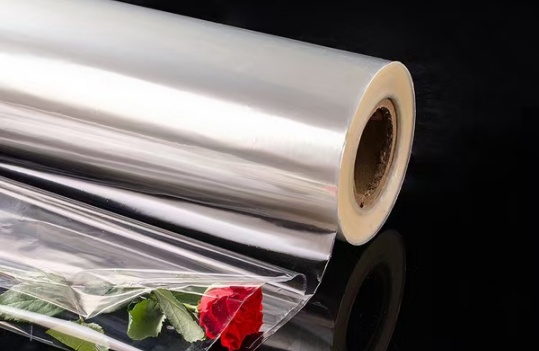
Although cast PP film and biaxially oriented polypropylene films are both polypropylene films, their performance and application fields are significantly different due to different production processes. CPP is known for its heat sealing and softness, while OPP is characterized by high strength and high transparency. The two form a complementary relationship in the packaging field.
1. Customized high-dispersion color master batches
2. Matting masterbatch
3. Anti block masterbatch
4. Slip masterbatch
6. UV masterbatch
7. PPA masterbatch
8. Nucleation masterbatch
9. Flame retardant masterbatch
10. Anti-bacterial masterbatch
1. Customized high-dispersion colour masterbatches
2. Matting masterbatch
3. Anti block masterbatch
4. Slip masterbatch
5. Slip antiblock masterbatch
6. Anti-fog masterbatch
8. Nucleation masterbatch
9. PPA masterbatch
STANDARD have 16 years of experience in film masterbatch and can provide you with a variety of customized solutions.
Contact us now to get free samples!