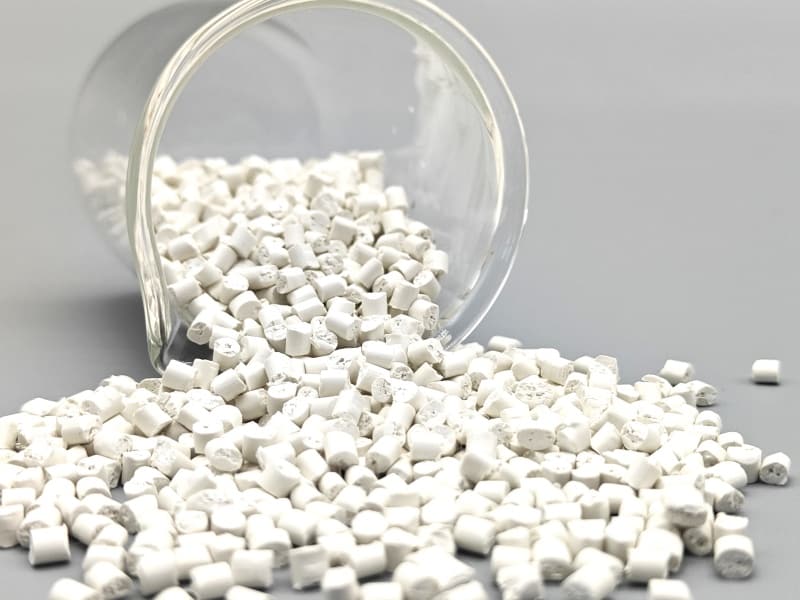
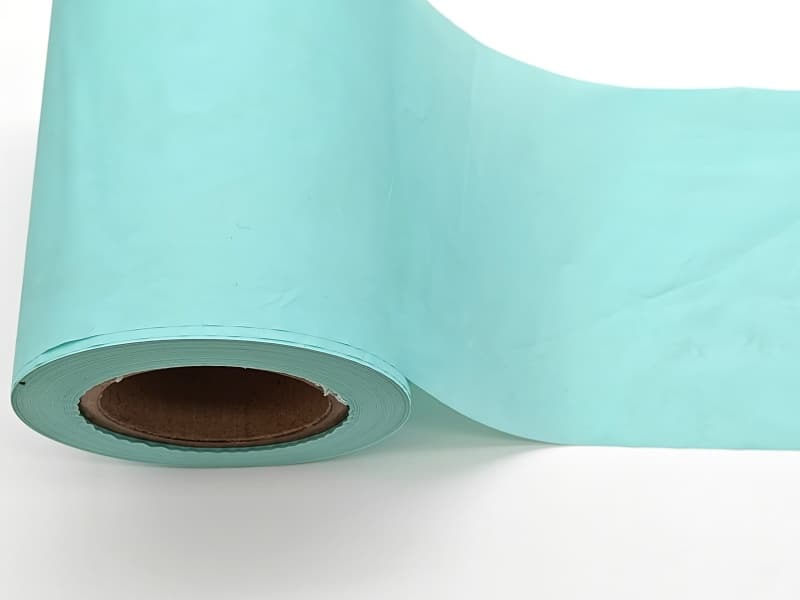
Why does Plastic Need a Flame-retardant Masterbatch?
High different batch stable
Good fire retardant effect
High cost performance
High dispersion

High different batch stable
Good fire retardant effect
High cost performance
High dispersion
In modern days, plastic products are everywhere - from mobile phone shells to car seats, from packaging to building materials, the convenience of plastic is self-evident. However, its flammable characteristics also bring great safety hazards. According to statistics, the global loss caused by plastic fires exceeds 20 billion US dollars every year, and flame retardant additives for polymers as the core material of plastic modification, FR masterbatch is one of the useful way to reduce the burning speed of plastic by more than 90% by adding trace amounts of flame-retardant ingredients, which has become a key role in ensuring the safety of life and property.
Burning is basically a chain reaction with free radicals.
Some flame-retardants (brominated or phosphorous ones) catch these radicals so the fire can't continue.
Simple idea:
They "steal" the active particles needed for burning → fire becomes weak.
Some systems swell, foam, or carbonize when heated, forming a shield on the plastic surface.
This blocks:
heat
oxygen
flammable gas
Imagine it as a built-in fire-protection coating.
Main types:
Intumescent (phosphorus-nitrogen), APP / PER / MEL.
Mineral systems like Mg(OH)₂ or Al(OH)₃ release water vapor and absorb heat when decomposing.
Effects:
cools the material
dilutes fuel gases
forms oxide protection layer
It's like dumping cold water and steam into the fire.
Some minerals create a dense surface layer that blocks oxygen.
Usually used together with other FR systems.
UL94 is the most common testing standard.
It's not "good or bad," but "pass or fail under a specific test."
HB (lowest) - Horizontal burn. Just needs to burn slower than a certain rate.
V2 - Vertical burn. Extinguish within 30 s. Dripping is allowed, and dripping can ignite cotton.
V1 - Vertical. Extinguish within 30 s. Dripping allowed but cannot ignite cotton.
V0 (most commonly required) - Vertical. Extinguish within 10 s. No burning dripping allowed.
5VA / 5VB (high level) - Very strong flame test. 5VA cannot have holes on the sample. Used for EV battery housings, outdoor equipment, medical devices.
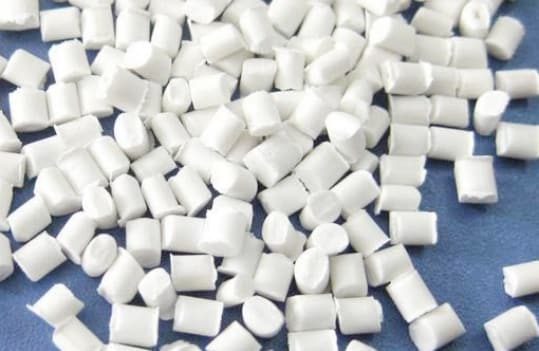
Composition and principle: Based on the bromomony series, the combustion chain reaction is interrupted by releasing hydrogen halide (HX).
Advantages:
High-efficiency flame retardant: the amount of addition is low, and the flame retardant efficiency reaches UL94 V-0.
High temperature resistance: suitable for PE, PP, ABS, TPU and other processes
Limitations:
Easy to decompose at high temperature
Physical performance impact: may reduce the physical performance of plastics (such as extension ratio).
Application: injection molding, film, non-woven fabric are all available
Composition and principle: With phosphorus and nitrogen as the core, combustion is inhibited by absorbing heat decomposition or catalytic carbonization.
Advantages:
Environmental protection: no halogen emissions, in line with RoHS, REACH, FDA and other international environmental protection standards.
Stable performance: little impact on the physical and mechanical properties of plastics, low let down ratio
Limitations:
Low flame retardant efficiency: a high amount of addition is required (usually 3-6%).
The cost is high
The "safety barrier" of film products
Melt index (MFI) is controlled at 8-16g/10min with TDS
Non-woven fabric enterprises use Leifen line* halogen-free flame-retardant masterbatch** (added 5%) to produce SSS non-woven fabric,
Melt index (MFI) is controlled at 50-70g/10min
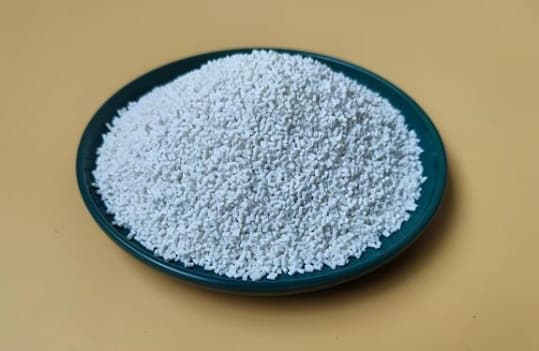
1. Not knowing the exact flame-retardant rating you need
Many people may just say "I need flame-retardant." But they don't know that there are levels: UL94 V0 (highest), V1, V2, HB (lowest). Higher level = higher cost + more complicated formula. You really need to confirm this with your technical team.
2. Not knowing what resin system your product uses
PE, PP, ABS, PA, TPE, TPU… They behave very differently. Flame-retardant master batch is always "system-specific." If you buy the wrong system, the product basically won't work.
3. Not knowing your processing temperature
Examples: PE film: 180–220 °C, TPU film: 190–210 °C, ABS injection: 230–250 °C. Different flame-retardants have different heat stability. If the temperature doesn't match, you are probably have to face: decomposition / white smoke, yellowish pellets, rating failure, stronger smell.
4. Thinking the same flame-retardant grade means interchangeable
V0 ≠ V0. Different suppliers' V0 materials can perform very differently. You must check: Is it suitable for your processing method? Does it reduce tensile strength? Any surface blooming? Any filament breakage (for fibers / nonwoven)?
5. Ignoring environmental regulations
EU, US, Japan all have strict limits on flame-retardants. REACH, ROHS… too many rules. What would possibly mess up here: product finished → cannot pass compliance.
6. Placing a big order without testing samples
Flame-retardant systems involve many variables. Skipping small-scale testing = taking a blind risk.
7. Assuming "more expensive = better"
The price difference is huge: Normal PE V2: 12–16 RMB/kg, PP V0: 18–26 RMB/kg, TPU halogen-free V0: 40–70 RMB/kg, Optical-grade transparent FR: 80–150 RMB/kg. Expensive ≠ better. You must check: resin system, dosage, stability, and actual pass rate.
How to choose a flame-retardant masterbatch?
| Consideration factors | Halogen flame retardant masterbatch | Halogen-free flame-retardant masterbatch |
|---|---|---|
| Cost | Low (the price of raw materials is low, but unstable) | Relatively high (high raw material price) |
| Environmental protection requirements | Not in accordance with REACH/ROHS | Comply with international environmental protection standards |
| Processing temperature | Poor stability at high temperature (<250℃) | Wide temperature range (180-300℃) |
| Application scenarios | Automobiles, electronics, medical buildings, etc., non-woven fabrics and other materials | |
If you need to understand the technical characteristics of flame-retardant masterbatch, you can get a direct process solution. Please contact the sales representative [email protected], and we will serve you wholeheartedly.