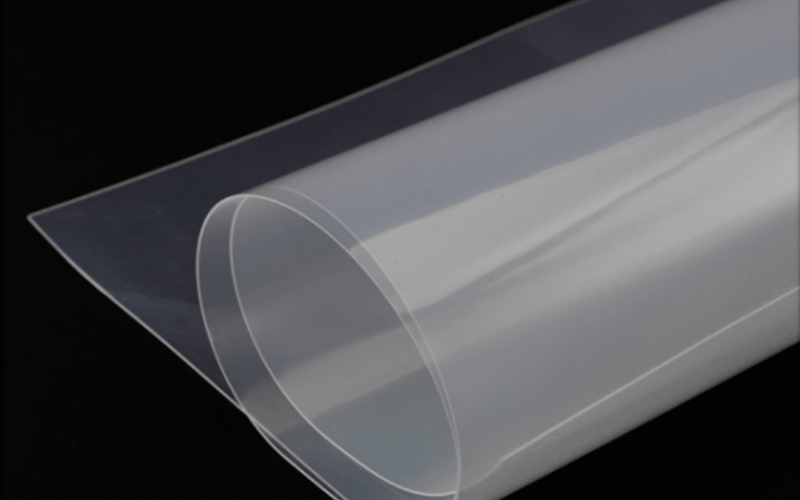
TPU Hardness Guide: Which One is Right for You?
Content:
Ⅰ. What Is TPU Hardness?
TPU (Thermoplastic Polyurethane) is a very special material, unlike ordinary plastics which only have two extremes—"hard" or "soft", TPU can adjust its tactile feel and even mechanical properties over a very wide range.
Through different formulations and processing methods, TPU can range from extremely soft (to an extent that can be easily deformed between fingers) (e.g., 70A) to as stiff as hard plastic (e.g., 98A), exhibiting completely different tactile feel and support.
To quantify this difference, people usually use two hardness scales: Shore A and Shore D. Our everyday products primarily use Shore A, which is targeted for measuring soft materials such as shoe soles, soft sheaths, and wearable straps; while Shore D is used to measure harder, engineered materials.
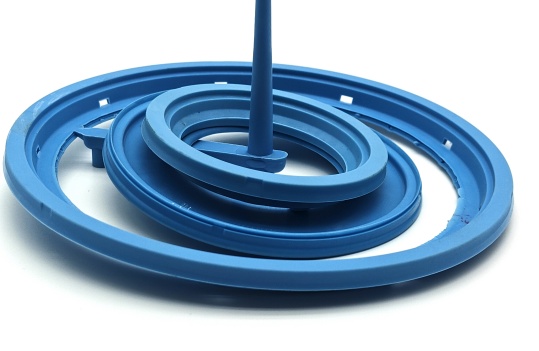
Ⅱ. TPU Hardness Chart (The Most Intuitive Chart of Hardness Ranges)
This version is based on our actual material testing and user project experience, and is more closely aligned with real-life situations.
| Hardness Rating | Tactile Experience | Common Uses | Reasons for Application |
|---|---|---|---|
| Shore A | |||
| 70A | Rubber-like feel, very soft | Highly comfortable insoles | Strong shock absorption, does not press on your feet |
| 80A | Notably soft and elastic | Sports straps, soft shell | More noticeable rebound |
| 85A | Stable and supportive | Phone cases, soft protective parts | Shock absorption and durability balance |
| 90A | Stable and hard | Running shoe materials, electronic case | Wear-resistant and structurally sound |
| 95A | Hard | 3D printing materials, industrial protective components | Not easily deformed, easy to print |
| 98A | Hard plastic | Industrial parts | High strength and extremely wear-resistant |
| Shore D | |||
| 55D | A distinctly plastic feel. | Industrial protective sleeves, machinery protection | High strength, a certain degree of elasticity |
| 60D | Hard, similar to nylon or hard rubber | Gear cover, load-bearing protective components | Strong stability and superior wear resistance |
| 65D | Very hard, almost like rigid plastic. | Industrial machinery parts, long-term load-bearing parts | Best resistance to deformation and pressure |
You can think of Shore A as a continuous spectrum from the "soft comfort zone" to the "wear-resistant support zone," which can be roughly divided into three segments:
70–85A → Comfort and flexibility
90–95A → Structural and abrasion resistant
98A → Engineering-grade strength
Shore D is mostly used in industrial applications.
Ⅲ. What TPU Hardness Should Be Selected for Different Usage Scenarios?
We select the broadest range of user needs, categorize them according to actual requirements, and give you the clearest advice.
Running Shoes (Foaming Process)
Optimal hardness: 90A-95A
When talking about manufacturing running shoes, manufacturers typically want materials that can rebound, and at the same time are not too soft as to lose support. This determines the optimal TPU hardness of running shoes: 90A–95A.
This level of hardness allows the running shoe to provide greater stability during gait, while also offering gentle shock absorption upon landing. It avoids the "collapse" effect of too soft materials and the lack of comfort associated with too stiff ones. In other words, it strikes a perfect balance between good running performance and comfortable support.
Phone Cases / Electronic Cases (Injection Molding Process)
Optimal hardness: 90A-95A
Phone cases have specific needs for TPU: they need to be drop-resistant, while also being easy to slip onto the phone. TPU that is too soft will become loose and crumbly like jelly, while TPU that is too hard will make you feel difficult to press the side buttons.
Therefore, the industry also uses 90A–95A TPU, which can provide sufficient impact resistance while maintaining a necessary hardness. When it comes to daily feel, this hardness gives people a "tough, but not sticky" experience, which is both safe and easy to use.
3D Printing of TPU - Hard TPU Filament (Extrusion Process)
Optimal hardness: 95A or 98A
When choosing TPU material for a 3D printer, it is important to remind you that softer TPU is more difficult to print. It can cause jamming, slippage, and a series of issues in the extrusion channel.
To solve this problem, we recommend you to use hard TPU filament, typically 95A or 98A. They are much more stable in printing, allowing you to create models of flexible jigs, phone cases, shockproof components, etc., more easily, and retain the properties of TPU.
TPU Film (TPU Blown Film or TPU Cast Film)
Optimal hardness: Depends on the manufacturing process.
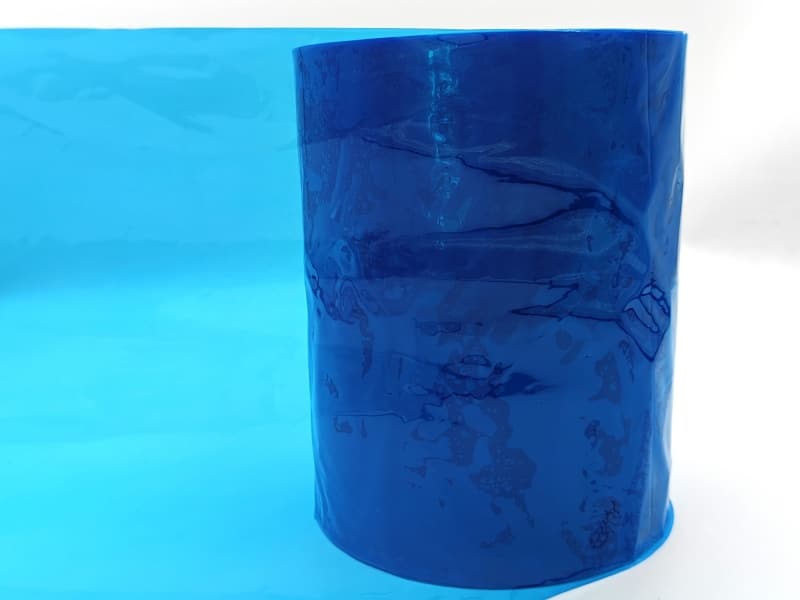
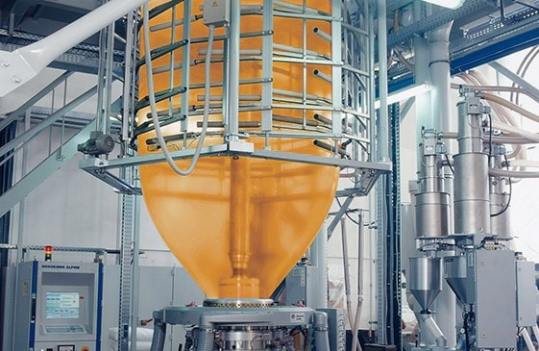
TPU film is environmentally friendly and can maintain extremely high flexibility. It is widely used in shoe materials, composite fabrics, waterproof and breathable fabrics. Its optimal hardness depends more on the manufacturing process: blown or casting?
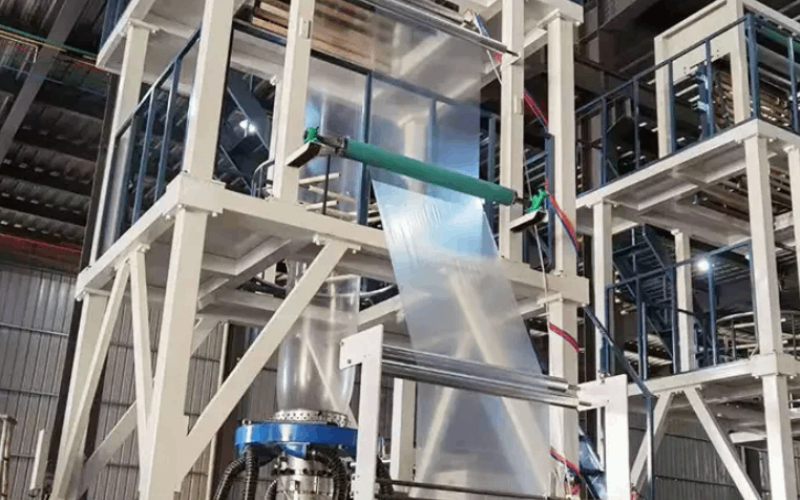
Typically, TPU blown film often uses 80A–90A TPU, which is more flexible and suitable for making high-resilience, fold-resistant films, such as shoe films, elastic fabrics, waterproof and breathable films, and lightweight sports products.
TPU cast film usually chooses 90A–95A TPU because the casting process can produce a smoother, more transparent and stable film. That enables it to be more suitable for applications that require wear and scratch resistance, such as mobile phone screen protectors, medical bonding films, outdoor equipment, and other surface materials.
Industrial Components
Optimal hardness: Shore D (55D–65D)
In the industrial field, Shore D TPU is often used in gear covers, shock absorbers, and mechanical buffers. All situations where they are faced with pressure or friction for a long time.
To ensure your product's stability and resistance, high-hardness TPU of 55D–65D is usually selected. Its hardness is already at the engineering plastic level, but it still retains the characteristics of TPU: higher elasticity, making it particularly suitable for industrial components with high load and high frequency of use.

IV. Comparison of TPU with Other Similar Materials
To help you make a decision faster, we've created a comparison table of the most common materials and their real-world experiences:
| Material | Elasticity | Abrasion Resistance | Temperature Resistance | Food/Medical Safety | Cost | Most Typical Application |
|---|---|---|---|---|---|---|
| TPU | High | High | Medium | √ | Medium | Phone cases, sports equipment, industrial parts |
| TPE | Medium | Medium | Medium | √ | Low | Toys, grips, soft accessories |
| Silicone | High | Medium | Highest | √ and best (food grade) | Medium to high | Pacifiers, medical accessories, kitchenware |
| Rubber | Highest | Medium | Medium to high (depending on the formula) | Partially √ | Medium to high | Tires, gaskets, shock absorbers |
| Nylon | Low | High | Medium | × | Medium | Gears, structural components, mechanical parts |
Many users ultimately choose TPU, not because it is the best material, but because it is the material with the most balanced overall performance:
TPU is more wear-resistant than TPE; More durable than silicone; More stable, easier to process, and lighter than rubber; more elastic than nylon.
Therefore, TPU is often the default choice for many components we mentioned before.
V. Conclusion
There is no standard answer while choosing the hardness of TPU. It depends on your specific needs, the usage scenario, and the performance requirements of the product itself. From phone cases to athletic shoes to 3D printed parts, the hardness varies.
As a professional TPU manufacturer and processor, we offer a set of Shore A and Shore D grade TPU materials to help you find the most suitable and stable hardness specification for your project.
VI. FAQs
Q1: Why do some TPUs, even though they are both labeled "85A", feel different to the touch?
There are four reasons:
1. Their raw material formulas are different due to different manufactors.
2. Their proportion of additives affects their feel.
3. Their injection molding and extrusion methods is different.
4. Shore A only measures surface resistance and cannot fully represent overall hardness.
This also explains why when assisting clients in selecting materials, we never just look at the number of hardness, but always provide samples for testing.
Q2: What is the TPU hardness scale? Is there a conversion relationship between them?
TPU hardness is primarily measured in two ways: Shore A and Shore D.
Shore A is used for softer TPUs (70A–98A), while Shore D is used for harder engineering-grade TPUs (50D–75D). Although both indicate "hardness," they are not directly interchangeable because the testing methods are completely different.
90A is roughly in the hardness range of 40D; while when the TPU hardness exceeds 98A, it usually switches to the Shore D standard to indicate higher rigidity.
All you need to know is that on this scale, the larger the number, the harder the material; the smaller the number, the softer the material.
Q3: What is the hardness scale of the Hard TPU filament?
Hard TPU filament generally refers to TPU 3D printing filaments with a hardness of 95A–98A. For example, the common hardness of Inland TPU is 95A.
This is the TPU hardness range that is most printer-friendly. It is stiffer and harder than the common 85A and 90A, making it less prone to deformation, while still retaining the flexibility and impact resistance that TPU should have. Therefore, it is also very suitable for printing functional models such as protective parts, mechanical components, and housings.
Suzhou Standard Polymer can provide TPU color masterbatch and functional masterbatch, which can widely used for blown film, cast film, foaming, cables, etc.
We have about 20 years experience and cooperate with many global companies.
Our masterbatches with high dispersion and high batch stability.
Contact us for free samples now!