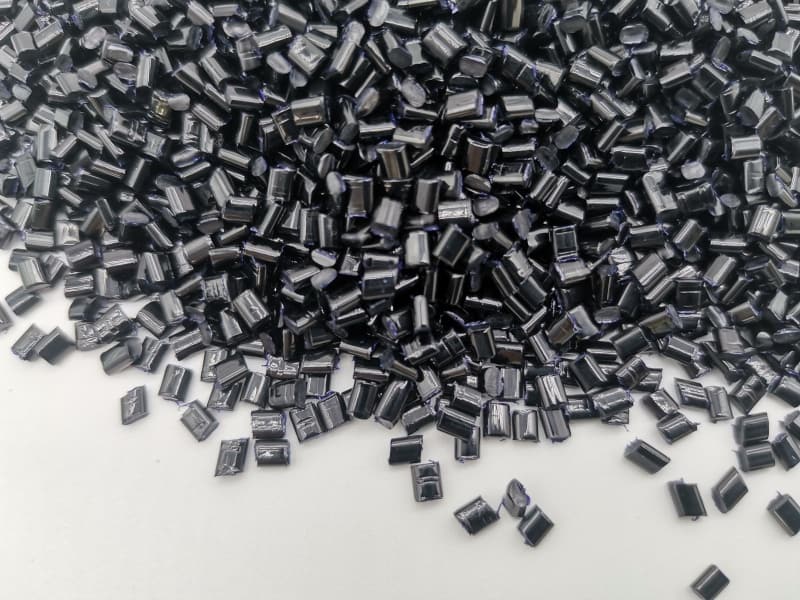
PP Density Explained: What Every Manufacturer Should Know
PP density knowledge share

PP density knowledge share
In this article, we will share all the knowledge about polypropylene density. The following article will be divided into the following structure for sharing:
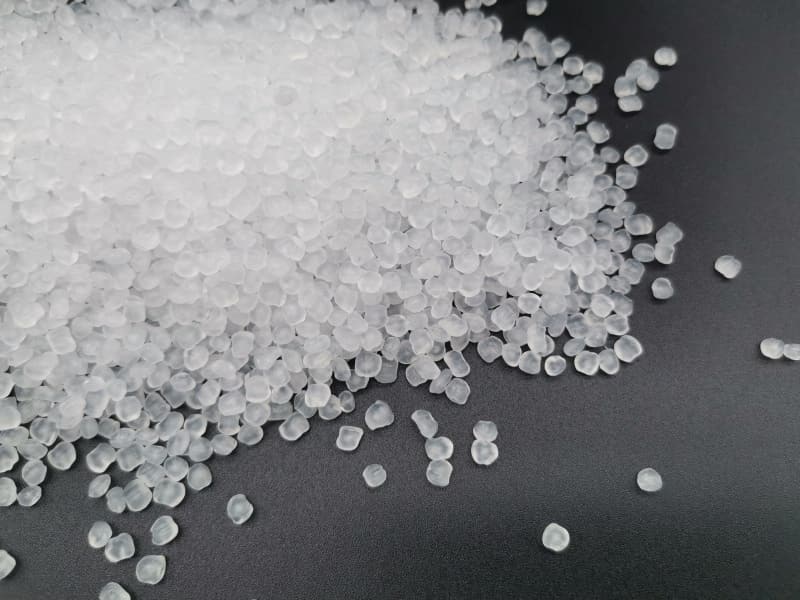
Polypropylene, referred to as PP, is one of the polymer materials formed by the polymerization of propylene monomers, with the chemical formula (C3H6)n. Polyethylene particles are usually milky white, non-toxic and odorless. Polypropylene has the characteristics of corrosion resistance and easy processing, and has become one of the most widely used plastics in the world.
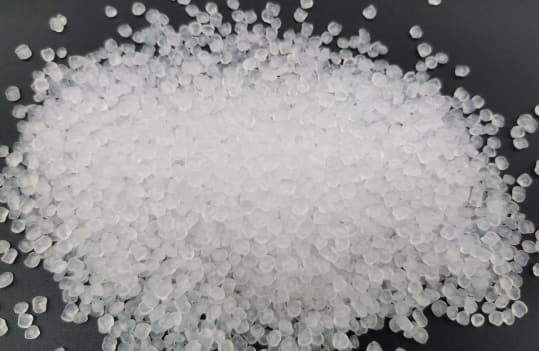
According to the different arrangements of methyl groups on the molecular chain, PP can be roughly divided into three categories:
The molecular chains are regular and densely packed, resulting in a higher density (0.90-0.91 g/cm³).
Compared to PP-H, random copolymer PP has its regularity disrupted. During aggregation, ethylene monomers are introduced into the molecular chain, resulting in a lower density (0.89-0.90 g/cm³).
The introduction of EPDM into homopolymer PP significantly improves impact resistance, but also results in a lower density (0.89-0.90 g/cm³).
The difference in density between these three types of PP lies in their different molecular chain structures. More regular and tightly packed molecular chains result in a greater number of molecular segments per unit volume, leading to higher density.
| Type | Abbreviations | Density (g/cm³) | Key Characteristics | Common Applications |
|---|---|---|---|---|
| Homopolymer PP | PP-H | 0.90–0.91 | High crystallinity, rigid, strong chemical resistance | Food containers, automotive parts, synthetic fibers |
| Random Copolymer PP | PP-R | 0.89–0.90 | Improved clarity, flexibility, lower melting point | Transparent packaging, medical devices, pipes |
| Impact Copolymer PP | PP-ICP | 0.89–0.90 | High impact strength, toughness | Toys, household goods, industrial components |
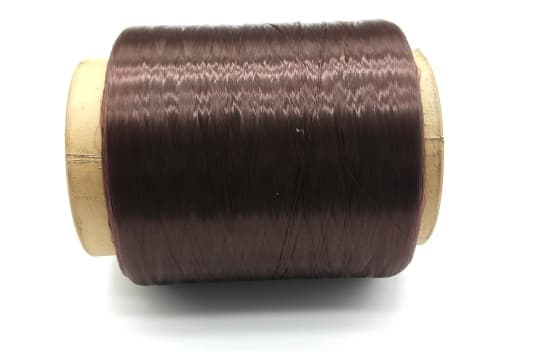
Ethylene content is the basic factor contributing to density differences of PP. Higher ethylene content results in lower density.
Adding 20% talc or calcium carbonate increases the density of PP, approximately to 1.1 g/cm³. The higher the filler added, the higher density.
For every 10°C increase in temperature, the density decreases by approximately 0.5%.
As the temperature rises, each molecule gains energy and begins to “shake”, “vibrate”, and even “dance” around its position. This requires more space to move, otherwise it would impact with neighboring molecules. Consequently, for the same mass, the density decreases.
Because the foamed PP forms a honeycomb structure, its quality remains unchanged, but its density is significantly reduced.
· Standard method: ASTM D792 (immersion method), using distilled water or alcohol as the medium
· Process: Measure mass → calculate volume → derive density.
· Minimal difference (typically 0.89–0.91 g/cm³).
· Main factor: Ethylene content in copolymer.
· Due to thermal expansion, the density of PP will decrease with increasing temperature.
· Key fact: Density decreases by ~0.5% per 10°C temperature rise.
The above is a summary of PP density, I hope this article will help you to better understand polypropylene density.
If you would like color masterbatch or functional masterbatch that used for PP, contact us freely!
PP Source – https://en.wikipedia.org/wiki/Polypropylene
When choosing PP color masterbatches, focus on the product's usages and required performance. With over 20 years of industry experience, our masterbatches offer high dispersion, vibrant color stability, and conform to ROHS/FDA standards. Our experienced team provides customized solutions, free samples, and professional technical support.We will ensure your projects stay on schedule. Contact us to find the perfect solution!