PP vs PE Plastics: Key Differences and Practical Guide
Have you ever noticed that? PP (polypropylene) and PE (polyethylene) plastic products are everywhere in both industry and daily life. However, it is so confusing to identify these two raw materials for newcomers to the field. We are so close to them while we actually have no idea of them.
Let's take a little time, step by step, to get a closer look at our "old friends".
Chemical Structure and Characteristics of PE and PP
🔵 PE (polyethylene) has a simple molecular structure with weak intermolecular forces, allowing its molecular chains to rotate and align easily — which explains why it's often used for flexible packaging materials.
There are HDPE (High-Density Polyethylene) with high strength, LDPE (Low-Density Polyethylene) with excellent flexibility, and LLDPE (Linear Low-Density Polyethylene) with both strength and flexibility.
🔵 PP (polypropylene), on the other hand, has methyl side groups that make the molecular chains stiffer and reduce rotational freedom. As a result, PP has higher stiffness and heat resistance than PE.
Another difference is that PP is more non-polar, which makes it difficult to bond or print on. Surface treatments such as corona discharge are usually needed to improve its surface polarity.
Physical and Mechanical Properties Comparison Between PE and PP
| Property | PE | PP |
|---|
| Melt Flow Index (g/10min) | 0.3–50 | 1–40 |
| Heat Deflection Temperature (°C, 0.45MPa) | 50–85 | 100–110 |
| Impact Strength | Higher, good at low temperature | Lower, brittle at low temperature |
| Tensile Strength | Moderate | Higher |
| Electrical Insulation | Excellent | Excellent (with stronger heat resistance) |
Overall, PP is more suitable for applications that require rigidity and heat resistance, while PE is better for products that demand flexibility and impact strength.
Processing Characteristics of PE and PP
| Process Parameter | PP | HDPE | LDPE |
|---|
| Injection Temperature (°C) | 200–270 | 180–280 | 160–260 |
| Mold Temperature (°C) | 40–80 | 30–70 | 20–60 |
| Extrusion Temperature (°C) | 190–250 | 160–230 | 120–200 |
PP generally shrinks less during cooling, producing parts with better dimensional accuracy. PE, in contrast, experiences greater shrinkage, so molds usually allow extra tolerance. For transparency, PP can be clarified with nucleating agents, whereas PE typically appears milky or opaque.
PE and PP's Typical Application Fields
| Application Field | Main Uses of PP | Main Uses of PE |
|---|
| Packaging | Microwave food boxes, yogurt cups, pharmaceutical packaging | Shopping bags, cling films, bottles |
| Automotive | Bumpers, dashboards, battery cases | Fuel tanks, cable protection tubes |
| Construction | Ventilation ducts, tanks, valves | Water pipes, gas pipes, cable sheaths |
| Household | Storage boxes, tableware, chair backs | Cutting boards, cleaning bottles, toys |
| Medical | Syringes, instrument trays | Medicine bottles, protective films, IV bags |
PE and PP Selection Guide
Now that we've gone through the differences between PP and PE, how do you actually choose the right one?
You can refer to the applications listed above and also consider the following factors — they'll help clear up most of your doubts:
Temperature Conditions: For applications where the temperature is consistently above 80°C or where high-temperature sterilization is required, PP is recommended. For low-temperature environments (below –20°C), PE performs better.
Mechanical Stress: For products requiring rigidity such as brackets or furniture, choose PP. For applications needing flexibility or impact resistance, such as hinges or protective cases, PE is preferred.
Chemical Environment: PP has slightly better resistance to oils and solvents, while PE performs well against acids and bases. Neither material should come into contact with oxidizing acids.
Transparency Requirements: For high transparency, choose random copolymer PP or HDPE. In practice, nucleating agents are often added to PP resin to improve clarity.
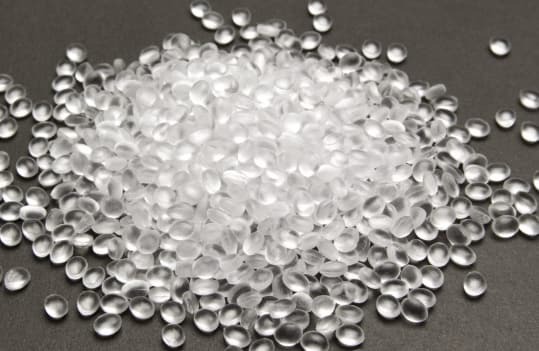
What Can Standard Polymer's PP or PE Masterbatch Offer?
Since 2009, Suzhou Standard Polymer Materials Co., Ltd. has specialized in masterbatch colorant solutions based on PP and PE resins, with customers in over 50 countries worldwide.
Main Product Lines:
Service Advantages:
Strong customization and sample trial capabilities
Equipped with injection molding, drawing, and film-blowing lab machines, plus six production lines imported from the U.S.
Professional export experience, serving clients across 50+ countries
FAQ / Frequently Asked Questions
Q1: Which is more heat-resistant, PP or PE?
A: PP. It can withstand boiling water.
Q2: Which is more environmentally friendly?
A: Both are non-toxic, recyclable plastics.
Q3: How to tell PP and PE products apart?
A: Generally there are three ways.
Touch: PE feels softer; PP is harder.
Bend: PE bends easily and rebounds; PP whitens after repeated bending.
Sound: PE film sounds dull; PP film makes a crisp rustling sound.
Q4: Can PP and PE be mixed together?
A: According to our experience, we suggest no. Their molecular structures differ, and simple blending causes poor adhesion.
Q5: Why do some products use both PP and PE?
A: To combine their strengths — e.g., PP as a rigid frame and PE as a flexible, corrosion-resistant shell.
Conclusion
PE or PP, differing in properties but both offering impressive performance. Standard color masterbatches provide vibrant color, excellent dispersion, and stability for both materials. Let's collaborate to create a new chapter in coloring together, we'll make the colors shine!