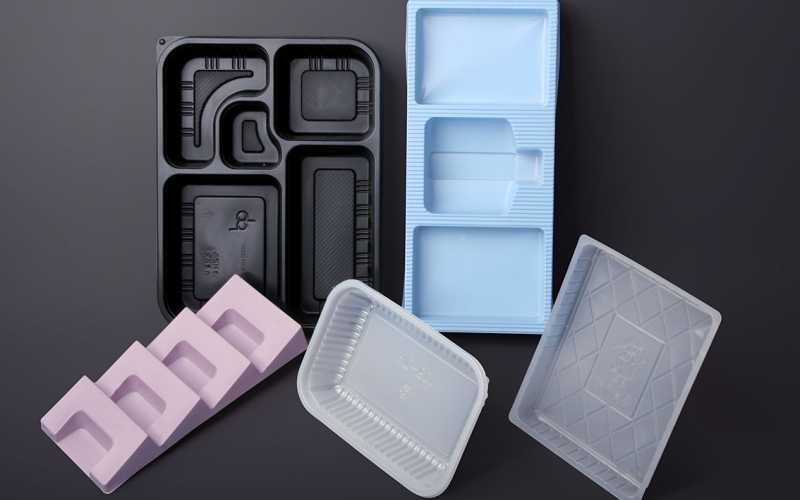
A Step-by-Step Look at Masterbatch Manufacturing by Standard Polymer
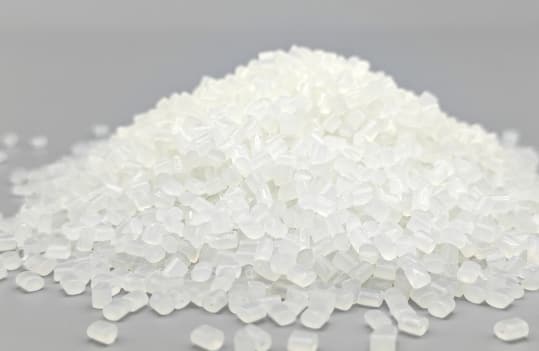
Masterbatch, as an indispensable functional additive material in modern plastic products, is a concentrated particle made by mixing pigments, fillers or various additives with resin substrates in a specific proportion, and then melt-mixing and granulating. Its function is not only to achieve fast and uniform coloring, but also to give materials various properties such as flame retardancy, UV resistance, and anti-static properties.
This article will help you have a clearer understanding of the production system of functional masterbatches and color masterbatches based on the actual manufacturing process, formula design and key quality control points.
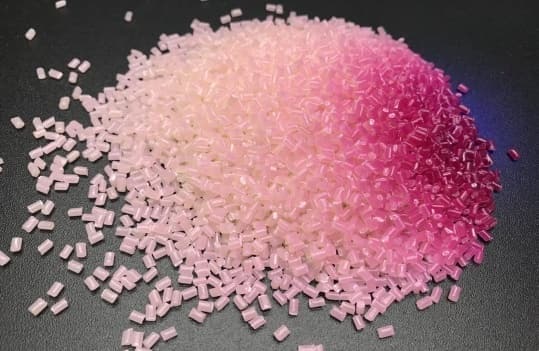
Masterbatch Application Industries and Scenarios
Masterbatches major applications include:
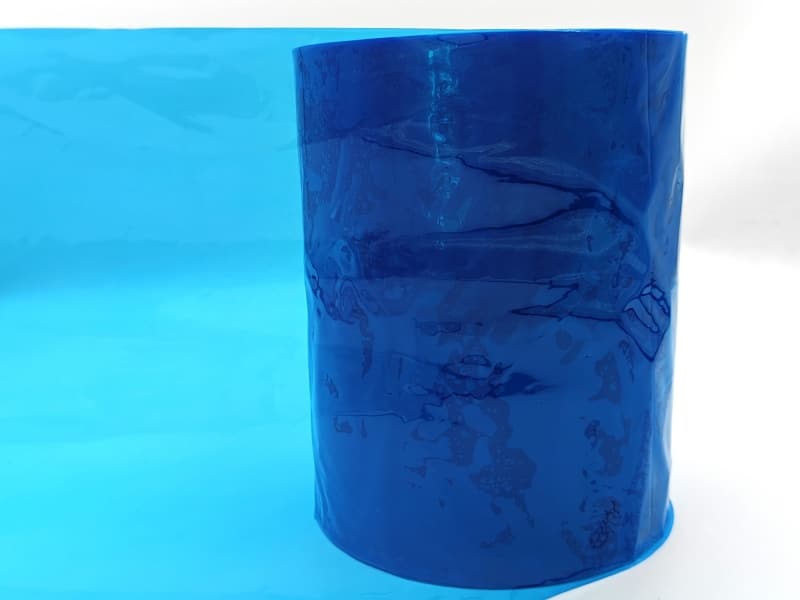
| Films | Stretch film, laminated film, BOPP/BOPE film, blown film |
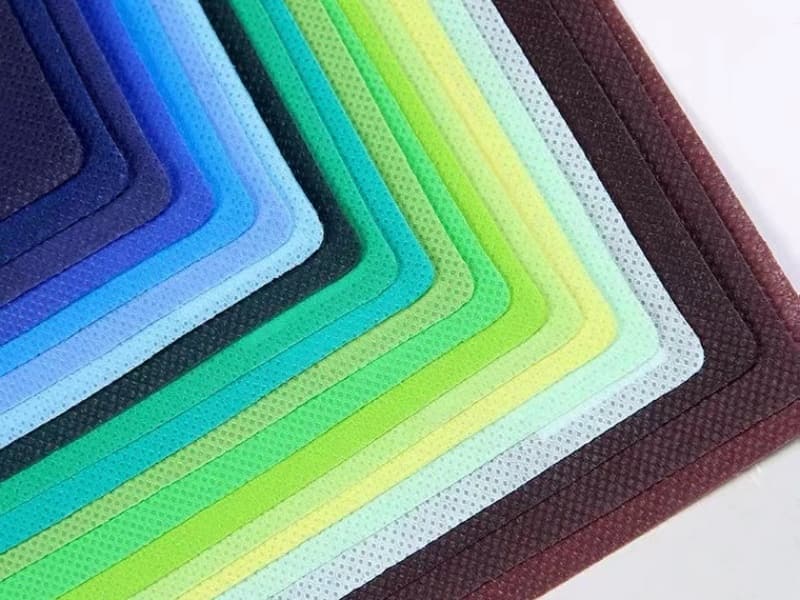
| Non-woven Fabrics | Spunbond, meltblown |
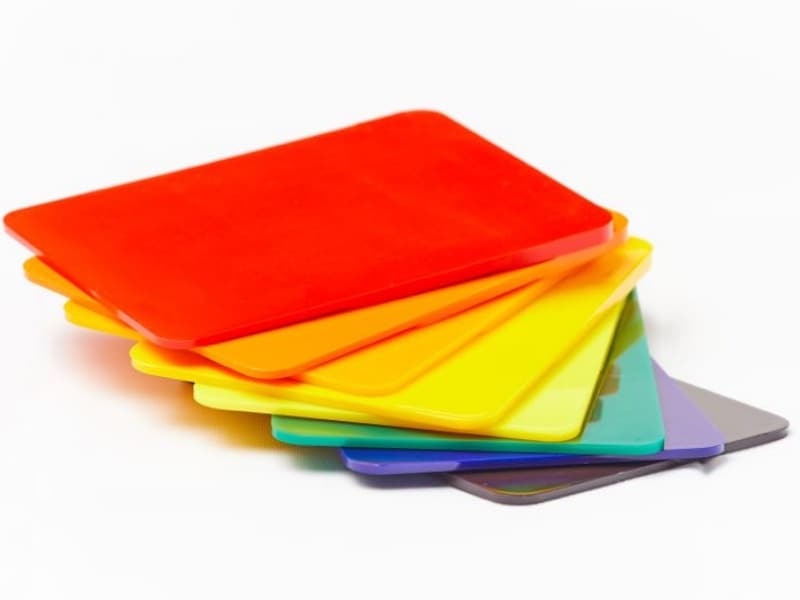
| Sheets | ABS sheets, PC sheets, HIPS sheets, PP/PE sheets |
| Extrusion | Cables, pipes, profiles |
| Injection Molding | Automotive parts, packaging, consumer goods |
| Rotational and Blow Molding | Tanks, containers, bottles |
Key Stages in Masterbatch Manufacturing
The main links of masterbatch manufacturing include:
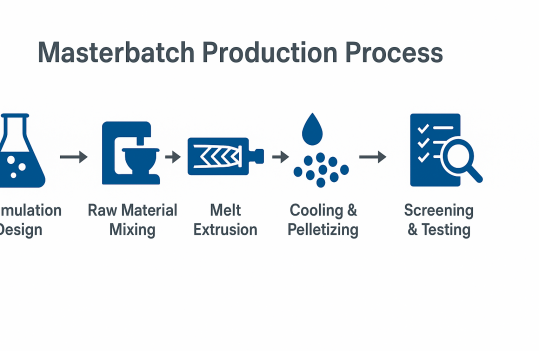
● Raw material selection
We focus on the compatibility and purity of the selected materials. So we purchase high-quality pigments, additives and suitable resin carriers to ensure the quality. We can 100% assure you that we sourcing from well-known brands.
● Premixing of formula
The raw materials need to be premixed to reduce the risk of color point and functional fluctuations.
● Extrusion and granulation
The raw materials will be fully melted and mixed through high-shear twin-screw equipment. Then they are extruded under controlled temperature and shear conditions. At last they are cooled and cut into standard or customized particles.
● Final Product Testing
After granulation, the masterbatch will undergo full quality verification. There are color difference detection, dispersion performance evaluation, thermal stability test and migration test. The company is equipped with comprehensive testing and quality inspection equipment, including injection molding machines, film blowing machines, and non-woven fabric machines, significantly reducing customers’ trial production time.
To learn more, I strongly recommend subscribing our official Linkedin account ----Suzhou Standard Polymer Co.,Ltd.
Key Quality Control Points and Their Impact on Performance
| Critical Stage | Directly Affects |
| Formulation Design | it greatly affects tinting strength, functional efficiency, compatibility with base resin |
| Process Control | it related to dispersion quality and the thermal stability |
| Color Consistency & Repeatability | it is relevant to color uniformity and accuracy |
| Pellet Morphology & Flowability | it affects feeding stability and downstream processing smoothness |
Through the quality control of the whole process, Standard Polymer provides not only products, but also a stable, controllable and trustworthy cooperation guarantee.
Masterbatch Usage Guide
1. Let-down Ratio (Addition Rate)
2. Resin Drying Requirements
Some engineering plastics must be predried to avoid defects like bubbles or poor surface finish:
| Resin Type | Drying Temp | Drying Time | Notes |
|---|
| Nylon (PA) | 80°C | 4 hrs | Moisture <0.03% |
| TPU | 100°C | 2 hrs | Prevents foaming |
| PET | 140–180°C | 4–8 hrs | For clarity and mechanical strength |
Note: PE and PP generally do not require drying (moisture absorption <0.01%).Why More and More Customers Choose Standard Polymer?
✅ Stable batches and reliable supply
Our masterbatches maintain excellent consistency, ideal for high-volume automated production with minimal defects
✅ Fast color matching and short delivery time
We are proud to say that Standard Polymer is equipped with comprehensive testing and quality inspection equipment, including injection molding machines, film blowing machines, and non-woven fabric machines, significantly reducing customers’ trial production time.
✅ Green and environmentally friendly, compliant with regulations
Compared with direct use of color powder, polymer colours can reduce workshop dust pollution by more than 70% (EPA data), minimizing operator exposure in the toner and improving workplace cleanliness. Our color master batch can pass environmental regulations such as RoHS and REACH.
✅ Multi-industry application experience
Standard Polymer has been engaged in masterbatch industry for over 16 years with the U.S.A. background. We support multiple industries such as non-woven fabrics, textile fibers, blown film, injection molding, extrusion, wire and cable. Until now, 90% of formulations are customized.
Feel free to contact us for free samples or technical support!