Color is among the first attributes a consumer would ask about when a new plastic product is introduced to the market. However, the selection of an appropriate Color Masterbatch for Plastics involves much more than selecting an almost similar match to the target color code for a customer.
The very same blue would need an entirely different composition of colorants in case of PE film, PP fiber, or ABS injection molded housing. Black could also require different compositions based on the application, dispersion of carbon black, heat stability, and the condition of the surface in terms of packaging and engineering plastics components respectively.
If the color masterbatch is not selected according to the properties of the base resin used, the process itself and its intended application, even if laboratory samples meet the criteria of acceptability in terms of color, dispersion, etc., actual production would still fail to provide the desired results.
Thus, the important thing in the selection of a color masterbatch is not in the percentage of pigments or cost per kilogram of the product. It is in the ability to provide the target color.
In this article, considerations on the decision making process of selection have been analyzed from the perspective of the plastic processing company. The choice of the master batch for each resin, the criteria which should be compared in terms of performance, the cost control issues, and the assessment of suitability of the supplier have been addressed.
When buying masterbatch, the search will typically be initiated by a requirement from a customer: a color chip, a Pantone code, a RAL code, or a sample part to match.
However, color matching is just the beginning.
There are other variables affecting the final color: the base resin, part thickness, surface finish, processing temperature, let-down ratio and the dispersability of pigments. This way, there is an opportunity for a mismatch between the color obtained in a laboratory and the color in the end product.
For instance, the same red masterbatch can work perfectly fine for a thick-wall injection-molded part, but produce a slightly different shade and visual effect in film. This is not always the sign that there was an error in a formula. This could simply be the effect of a different part design and processing method.
When choosing a custom color masterbatch, here are the five things that we recommend you to define first:
Base Resin: the exact type and grade of base resin.
Processing Method: injection molding, blown film, cast film, extrusion, spinning, etc.
Target Color: target color, standardized color code, or actual sample.
End Usage: final application and the appearance properties required.
Performance Properties: weathering, heat, migration, hide power, or any other property required.
The more detailed this information is, the easier it will be for the masterbatch manufacturer to choose the correct pigment system, carrier resin, and let-down ratio, thus saving on repeat sampling.
A plastic masterbatch typically consists of pigments or dye colors, carrier resins, and other ingredients used in the formulation. The main purpose of a masterbatch is to predisperse the colorant within the carrier system and subsequently introduce it to the base resin through addition.
While compared to using pigment powder, a masterbatch is easy to measure and handle while providing a relatively stable coloring performance if the correct formulation and processing parameters have been achieved.
However, there are many things about masterbatch other than just its color that make each one different from the other.
The level of color strength will determine the amount of masterbatch required for obtaining the desired color. In the case of black, white and concentrated colored masterbatches, the pigment type, concentration, and dispersion will impact the final outcome.
Whereas in a particular masterbatch there is a need for a higher let-down ratio in order to achieve the desired color, then it becomes necessary to determine the reason behind this.
Good dispersion minimizes local color differences, color specks, and color streaking and increases the consistency of appearance in the final product.
However, it must always be kept in mind that dispersion does not necessarily depend on the size of the pigment particles alone. Rather, dispersion must always be judged in terms of its final application. For instance, film, fiber, and high-gloss injection molding applications differ in their tolerance to visual defects.
Pigments need to withstand the temperature conditions and the retention time in the actual process step. Some pigment systems may exhibit a hue change, a reduction in colour intensity, or any other undesirable phenomenon after high temperature processing.
Therefore, while choosing, make sure that the masterbatch is compatible with the actual processing temperature, and not just the melting temperature of the base resin.
In cases where there is an ongoing project, the requirement of the customer goes beyond producing the first sample that will pass the test. Consistency among batches with similar color is required.
Hence, batch-to-batch consistency, standardization of samples, formulation and process controls are part of the quality of color masterbatch.
This is one of the issues that need to be raised first in any such selection process.
It will not be possible to have a universal masterbatch for coloration for all types of plastics. Depending on the nature of the base resin, the temperature of processing, its rheology and end usage, there will be a need for a new carrier and pigment system.
Base resin | Common applications | Key selection points for masterbatch |
PE (Polyethylene) | Film, bags, pipe, blow-moulded containers | Dispersion, film surface quality, carrier match and any weathering resistance required by the application |
PP (Polypropylene) | Nonwovens, fiber, injection-moulded parts, woven bags | Spinning or forming temperature, color stability, dispersion and mechanical properties |
ABS | Electrical housings, consumer goods, industrial parts | Hue accuracy, surface appearance, heat resistance and processing stability |
PET | Fiber, sheet, bottles and other products | Processing temperature, carrier match, color stability and related process requirements |
PA (Polyamide) | Engineering plastic parts, fiber, automotive components | Heat resistance, dispersion, mechanical properties and processing conditions |
PC (Polycarbonate) | Electronic and electrical housings, transparent or opaque parts | Heat resistance, appearance requirements, transparency and part performance |
TPU | Flexible parts, film, cable and other applications | System compatibility, processing stability, surface quality and migration risk |
These are general directions. The exact formulation still needs to be validated against the resin grade, the processing conditions and the target product.
Carriers are a very important component in the formulation design of color masterbatch.
The carriers affect the dispersion and processing behavior of the pigment when added to the base resin.
In many cases, a color masterbatch for PE film and another one for PA engineering plastic will require different carriers.
This means that the assumption that all colored masterbatches are the same because they have the same color is wrong.
In certain cases, a carrier that serves as a universal carrier is suitable. However, in other cases, such as fiber, films, and engineering plastic with tough demands, it would be prudent to check if the carrier is compatible with the base resin.
In selecting your color masterbatch supplier, ensure that they are able to advise you on what carrier to use depending on the type of base resin used.
Although they are all Color Masterbatch, the technical focus of different color systems is not the same.
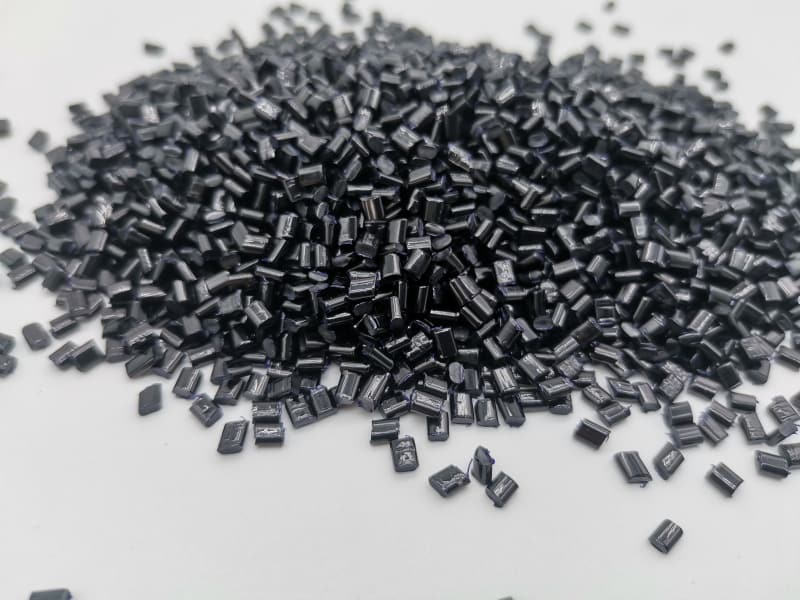
Ordinary Black masterbatch mostly relies on carbon black as the prime colorant; however, there may be many differences in terms of types of carbon black used, the level of carbon black, dispersion performance, and the carrier system used.
In case of standard plastic products, the end users might just care about jetness and price; in case of film, fiber, pipe or engineering plastic, other criteria like dispersion, surface, mechanical properties and weathering resistance could also come into the consideration.
In case of selection of black masterbatch for plastics, do not just rely on the amount of carbon black content. It is more crucial that you are able to get the jetness and processibility of your requirement at the desired let-down ratio.
In case of outdoor application for long period, consider the suitability of the carbon black system and the formulation for weathering resistance requirements. An ordinary black masterbatch should not be considered a high weathering product.
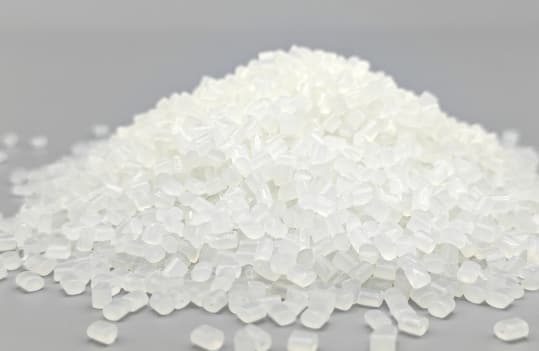
Whiteness and hiding power in white masterbatches are normally delivered by titanium dioxide (TiO₂). It is important to consider the TiO₂ grade and loading, dispersion efficiency, compatibility of the carrier and the part thickness while choosing white masterbatches.
In film application, low hiding effect will cause the base color to appear through the film. In injection-molded applications, consumers would be more concerned about the whiteness, shade and processability.
Therefore, evaluation of white masterbatch for plastics cannot be based on TiO₂ content only.
Red, yellow, blue, green, purple and all other colors of masterbatches generally require selection of pigmentation based on the desired color, process temperature and intended use.
In cases where there is a requirement to have an exact match of the customer color code, color matching is not just a matter of matching the starting color but has to consider the change of color due to processing and batch-to-batch consistency.
If the product has outdoor use, also take into consideration the lighting and weathering aspects vis-a-vis the service environment. If it is for high process temperatures, heat stability of the pigment has to be considered.
The TDS (Technical Data Sheet) issued by the supplier will give you an idea of the product at first, but it is not going to substitute production trials entirely.
The color masterbatch for plastic that will fit needs to suit the product characteristics when used with customer resin.
This is what we advise you to evaluate.
In case there is any Pantone, RAL or physical sample supplied by the client, specify how the color match will be carried out.
The color of the material depends upon the color of the base material, thickness of the part, surface finish, lighting conditions, and process parameters. Consequently, the visual appearance of the color on the color card, molded part, and film can be different.
In case of critical projects, choose a standardized sample mutually agreed and then set up the color tolerances and conditions of the test.
Plastics vary in their processing temperature requirements, and the same pigment may exhibit different levels of heat resistance depending on the particular grade.
In cases where the processing temperatures are high or the residence times long, inform the supplier of your actual processing temperatures to verify suitability of the masterbatch.
In cases of spinning, engineering plastics, and other high-temperature applications, the performance of the masterbatch should not be evaluated under ordinary injection molding conditions.
The initial evaluation can be done through examining the final part surfaces, color distribution, and particle defects. For more challenging projects, the FPV (Filter Pressure Value) or other dispersion metrics can be assessed using a suitable testing procedure.
However, the FPV outcomes have to be evaluated with regard to the testing conditions, and they cannot serve as an equivalent to the final part evaluation.
In case of engineering plastic, fibers, and load bearing parts, do not limit your consideration just to the color effect. Consider whether the tensile strength, elongation, impact performance or any other relevant parameter satisfies the requirement of the finished item, even when the master batch is added.
In case of a continuous mass production process, consider the difference in colour and processing behavior, as well as the quality record of each batch.
When it comes to the supply chain, a successful sample test is just the start. The ability to meet the standards in future batches forms the basis of a good partnership.
Dosage rate of masterbatches influences the end color, opacity, performance and overall costs, but there is no universal dosage rate for every plastic and color.
Let down ratio usually depends on:
Nature of pigments and their concentration.
Desired color and its strength.
Color of base resin.
Thickness of parts and finishing of surface.
Process technology and possibility of mixing.
Desired function and final requirements for the part.
In some cases, it would be sufficient to have a smaller let down ratio to reach color requirements.
Therefore, it is better to use the suggested let down ratio from the supplier only as an indication and starting point for the trials rather than applying the same ratio to every production line.
When comparing different suppliers, first work out the masterbatch cost per kilogram of finished product:
Masterbatch cost per kg of finished product = masterbatch unit price × let-down ratio
For example:
Item | Option A | Option B |
Masterbatch unit price | 18 RMB/kg | 22 RMB/kg |
Let-down ratio | 4% | 3% |
Masterbatch cost per kg of finished product | 0.72 RMB | 0.66 RMB |
However, in this case study, Option B is relatively expensive than Option A in terms of unit price, but since it requires a reduced let-down ratio, the masterbatch price per kilogram of the final product becomes less.
Nevertheless, this comparison holds only if the two products will be able to meet all color, appearance, and performance standards. Other criteria to be considered include the rate of rejects, efficiency, and mechanical properties.
When it comes to purchasing managers, a reasonable measure would be to consider the total price of meeting the product standard.
Along with the type of resin, the plastic processing method is also an important factor in masterbatch selection.
Injection molded part's color will depend on its thickness, surface, mold condition and temperature. When it comes to making highly glossy housing, appliances and consumer goods, the clients must consider differences in color, particles, gloss and batch uniformity.
Films can have sensitivity to color uniformity as well as defects. In the case of selection of color masterbatch for film applications, dispersion, film aesthetics, compatibility, and processability have to be taken into consideration.
However, in the case when films require slip, antiblock, antistatic or weathering properties, then the functional system has to be evaluated as well.
Color masterbatch for fiber spinning requires not only color requirements but also should be compatible with the spinning temperature and continuous production.
In case of various fibers systems, like PP, PET and PA, the carrier, colorant, and processing conditions should be compatible.
In addition to color uniformity, pay attention to filtration performance, filament breakage and physical properties of the fiber.
Blow moulded products may require consideration of the interaction of colour, hiding power, wall thickness and surface quality.
Where the product is intended for the packaging of detergents, chemicals or other environments, ensure the formulation is compatible with the content, usage and regulations.
Applications involving pipes and profiles generally require stable color performance and weathering resistance, as well as certain mechanical or other characteristics in relation to their specific application.
When it comes to outdoor applications, the selection process is not limited to color matching alone; one must evaluate whether the chosen pigment and stabilization system can withstand the environmental conditions.
This is why custom plastic color masterbatch has to be selected for the intended application, not the color alone.
A supplier of color masterbatches, to plastic processors, is not just a source of materials but will influence product development, sample taking, and consistency in volume production.
If your supplier can only supply products from an existing catalog without the capability to adjust for the specific resin, method of processing, and color, your clients will have to sample repeatedly whenever they have a specific application.
When selecting a color masterbatch supplier, consider the above.
Can the material supplier vary the composition according to the color sample, base resin, temperature used and intended use of the product? Is it possible for them to validate the samples for certain colors or performance requirements?
This is very critical in the case of complicated colors and engineering resins.
The color, heat stability, light stability, migration stability and cost of different pigment systems may be different.
The material provider needs to determine which pigment and binder to use depending on the application rather than using the same formulation for all products.
All color measurement, melt index determination, thermal stability analysis and dispersion tests are sources of reference for the formulation and quality control.
Depending on the application, carry out film, injection molding or spinning and other tests in order to determine the behavior of the masterbatch in real production situations.
It is extremely vital to have stable quality record, standardized sample handling and trackable batch control for long-term projects.
The purchasing team must also make sure that the lead time of sample, volume, minimum order quantity and documents match with their production plan.
Standard Polymer (STD) specializes in color and functional masterbatch formulation and manufacture. As per various plastic applications, we prioritize matching the formulation to the application process rather than producing a product that is consistent with a certain color regardless of the application.
Based on our over 20 years of experience in the industry and knowledge in formulating different products, we are able to analyze various formulations on the basis of different resin systems, color and processing methods and validate it against the actual application.
In custom color masterbatch formulation projects, some of the things that we require from the customer are:
The resin grade and base that they use;
The color required or the pantone/rab code or physical sample;
The processing method whether injection molding, film, spinning, extrusion or blow molding;
Thickness, surface effects and performance requirements;
The intended let-down ratio, test standard and purchase volume.
Among the facilities available at STD are; colorimeter, melt index apparatus, infrared spectrometer, oven and application testing facility for film, spinning and others.
Formulation requirements for black, white, and colored masterbatches, and for specialty masterbatches like UV resistant, antibacterial, slip, flame retardant, and other types of masterbatches may be determined in various applications.
What is important to the customer is not only a color sample but rather a formulation which matches the specific resin as well as the manufacturing process and that can be used in large-scale manufacturing.
When searching for Color Masterbatch for Plastics, we have something for you at STD. You should give us the target color, base resin, manufacturing process, and end use of the material and we can determine the right formulation approach for your project.
Plastics Color Masterbatch is a type of masterbatch that is used to color plastics. This type of masterbatch normally consists of pigments or dyes, carrier resins, and other ingredients in the formula. It can be used in injection molding, films, fibers, pipes, and other forms of plastic manufacturing.
Select the paint according to the following parameters: base resin, production process, desired color, part thickness, production temperature and performance requirements. For custom jobs, we suggest you supply a standard color sample or a sample material for validation at the production level.
Not necessarily. While some recipes may be effective for different types of resins that are similar, carrier compatibility and other factors could vary. In cases where greater precision is required, the particular resin type and processing parameters should be known.
Not always. The specific answer depends on the pigmentation system, dispersive power, color of the substrate, and thickness of the component. We recommend conducting trials for a reasonable amount of let down to achieve the required color and properties.
It is advised that you provide us with the target color code/sample, grade of the resin to be used, process of production, target let-down ratio and the requirements for the product's performance. In case the end-product is meant for outdoor exposure or food packaging, or for any other specific environment, please let us know.
Evaluation should be thorough from the aspects of color matching ability, carrier choice, pigment distribution, batch uniformity, sampling test, quality paperwork, and lead time management. For critical projects, we recommend doing actual processing tests before placing volume orders.
For black master batch, one should concentrate on carbon black system, jetness, dispersion, and usage. For white master batch, it is essential to consider titanium dioxide system, whiteness, hiding power, and dispersion. Evaluation criteria are different and therefore they cannot be compared based on pigment quantity only.
Compare the let-down ratio, the cost of the end product, the rejection rate, and the processing characteristics when trying to attain the same color and performance properties. A low-cost masterbatch is not necessarily the cheapest one in the long run.
Selecting the Color Masterbatch for Plastic Should Not Start and End With the Name of the Color and Quote.
A better way to make the selection would be to know first the requirements of the end-product and follow the steps to match the base resin, pigmentation system, carrier, processing method, and quality standard.
In cases where a typical and routine coloring is required, a typical masterbatch formula would suffice. In cases when high temperature processing, thin gauge films, fibers, engineering plastics, and outdoor special uses are involved, matching the formula to the process becomes more critical.
Masterbatch supplier that is really worth the effort of forming an alliance in the long run is not just about supplying colors. It is about understanding the application requirements, evaluating the technical risk factors, conducting sample testing, and controlling batch-to-batch consistency.
When you need the right plastic color masterbatch for your project, always consider the resin, processing, and end-use requirements and work together with the supplier on establishing the test standards. That would definitely be more useful than just comparing masterbatch prices.