Some examples of such defects include the formation of gel spots, fish eyes, non-uniform color, uneven distribution of pigment, film surface defects and non-uniform slip behavior. The defects in the film extrusion process are not only an issue concerning the quality of the finished product but are also an issue that results in inefficiencies in the production process.
The film manufacturers when manufacturing blown film, cast film and others should select their film masterbatch not only based on the color, but also the properties in terms of pigment dispersing ability, surface quality and other functional properties. In selecting their film masterbatch, they have to balance tint strength, dispersion, carrier and processability among other things.
Film defects do not always arise due to the type of masterbatch chosen. There are numerous variables that could influence the results of the procedure, such as the base resin, temperature of processing, screw design, condition of the die, filtration, cooling, and feed uniformity.
This research is premised on practical problems of production. The document identifies some common defects of plastic films, explains the function of the masterbatch, and recommends the selection of an ideal masterbatch for use in the manufacture of plastic films.
While analyzing the problem of processing films, it is important to take into account the form of the defect, its pattern, and the moment when it occurs. It is also required to find out if the masterbatch causes the problem. Raising the temperature during the processing and replacing the masterbatch right away will not resolve any problem.
Common problem | English keyword | Typical sign | Possible cause |
Gel spots, fish eyes | Gel Spots / Fish Eyes | Transparent, white or raised small points in the film | Resin gels, insufficient plasticizing, particle agglomerates, equipment build-up |
Color variation, uneven color | Color Variation | Color differs within the same roll or between batches | Feeding fluctuation, uneven dispersion, formulation or process change |
Color streaks | Color Streaks | Lengthwise or localized color streaks on the film surface | Uneven mixing, abnormal flow, die build-up |
Black specks, contamination spots | Black Specks | Black particles or spots on the film surface | Material carbonization, equipment contamination, foreign matter |
Higher haze | High Haze | Transparent film turns hazy, light transmission drops | Resin crystallization, additives, fillers, film thickness or process change |
Uneven surface | Film Surface Defects | Rough film surface, localized bumps or a grainy feel | Poor dispersion, gels, die problems |
Unstable slip and anti-blocking | Unstable COF / Blocking | Film sticks together, coefficient of friction changes | Slip agent migration, formulation mismatch, insufficient curing time |
Unstable processing | Extrusion Instability | Bubble fluctuation, pressure changes, frequent film breaks | Resin, equipment, feeding or processing conditions out of range |
Such defects may occur simultaneously, and various causes may lead to similar surface conditions. For instance, gel spots and fish eyes are not necessarily caused by the same thing. It is important to identify the defect in order to select an appropriate method of treatment.
Gel spots in the plastic film and fish eyes in the blown film are two defects that receive much focus in film production, particularly thin gauge packaging films, printing films, and laminated films. Even the presence of small particles will affect the visual aspect of the product and its processing.
First, classify the various defects.
The presence of pigment which is not evenly dispersed in masterbatch will create clusters. This leads to uneven color, particles or appearance problem.
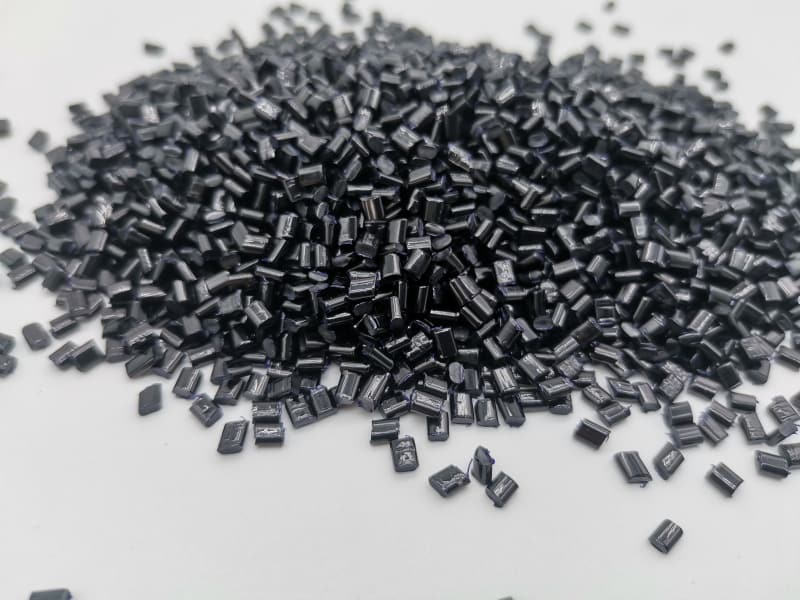
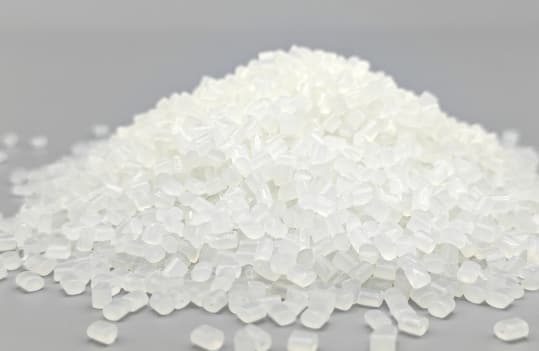
For black masterbatch, the dispersion of carbon black will affect jetness, color and film surface quality. For white masterbatch, the dispersion of titanium dioxide plays an equally important role. This applies to all color masterbatches and requires a dispersion system for each pigment used.
By selecting masterbatch with well-dispersed pigment, we avoid problems related to the dispersion of the masterbatch itself.
The gels within the resin might result from crosslinking, degradation, or other abnormal polymer formation. Such defects do not get eliminated by increasing the processing temperature or the color masterbatch.
The problem is that increasing temperature without determining the actual cause of the defects increases the likelihood of thermal degradation.
There are certain resins or additives that may not melt entirely and will form what appears like fish eyes. This problem could be attributed to the characteristics of the raw materials used, temperature profile, screw mixing and residence time.
Materials that remain for long periods in the die, adapter, and flow channel tend to degrade and accumulate. These then become detached and appear as black spots or hard particles.
This is an issue that comes under die buildup in film extrusion. Just replacing the masterbatch will not solve the issue.
Follow the following order:
With the base resin and process conditions remaining the same, compare various masterbatch samples.
Determine if there are any significant differences in gel spot content, color consistency and surface condition of the film after changing masterbatch.
Determine if there are any tendencies for defects to occur at specific location or during extended period of production.
Check the filter system, the screw, the die and the base resin lot.
In case of well-defined projects, filtration characteristics can be determined using the tests like FPV (Filter Pressure Value) according to the designated conditions. However, not all gel spot defects will be covered by FPV test, and the FPV test itself will not correlate directly with the quality of the final film.
Practical recommendations for selection: in case of film gel spots, verify the source of defects first. Only after that you can decide if switching to high-dispersion masterbatch, adjusting the carrier system or checking the equipment is necessary. It is the separation of raw materials related issues from process related issues that allows to avoid unnecessary trials.
Variation in the color of plastic film may be observed in the same roll or in different batches.
For instance, black film could become grey in spots or less jet. White film would vary in whiteness and opacity. Colored film would change its shade or have streaks in it.
All of the following factors influence the final color: the pigment type, the amount of the pigment and dispersion. Two masterbatches having the same pigment quantity don’t mean that their tints and color characteristics are the same.
If you select a masterbatch for film production, pay attention to the following aspects:
whether it can achieve the required color code and hiding level;
whether the pigment is well dispersed;
whether the color remains stable from batch to batch;
whether it is able to retain its target color at the real film thickness and processing conditions.
With black masterbatch, the quantity of the carbon black should not be considered separately. The type of carbon black, its dispersion quality, compatibility with the carrier and final let-down ratio also matter.
The uniformity of blending of masterbatch into the base resin through manual mixing depends on the mixing procedure as well as the time of operation and state of the material.
For thin gauge film, for long continuous runs, or when the product requires tight color control, metering will generally assist in reducing color variations.
In case there is a systematic variation in the color differential, one should examine feeding, processing speed and process conditions. The composition of the masterbatch should not be assumed to have changed immediately.
Use standardized color samples accepted by the customer, and calculate L*, a*, b* and ΔE with the help of spectrophotometer. While comparing different master batches, try to keep the lighting condition, viewing condition, film thickness, and processing condition same.
Bear in mind that the color on an injection molded test plaque or thick sheet is not necessarily the same as the optical effect in a thin film.
Therefore, color consistency in a plastic film must be determined in the actual production conditions of the customer whenever possible, and not just by the color chip and/or TDS of the supplier.
In the case of transparent film, printing film and laminated film, haze, light transmittance and the quality of surface could be equally important aspects along with color.
In case there is reduction in transparency when mixed with the masterbatch, it does not mean that there is a problem of dispersion of the pigment. It will depend on the nature of the masterbatch and quantity, the nature of the resin used, crystallization behavior and film thickness.
All three kinds of masterbatch such as white masterbatch, color masterbatch, and filler masterbatch can alter the optics of the film. The degree of the impact will vary from one material to another, from one particle to another, from one ratio to another, and from one film structure to another.
In case the customer demands high transparency, first verify that the masterbatch can be used in transparent film.
Carrier resin compatibility is one thing that should be considered while selecting a film masterbatch.
PE blown film, PP cast film, and some other specialty films may have their own unique criteria for carrier and rheology characteristics. Even if there are two masterbatches having similar colors, there could be different matching degrees between carriers and base resins.
In the case where you use the same resin, same film thickness, and nearly similar processing conditions, you should check:
The light transmission and haze.
Surface particulates and local defects.
The uniformity of the film thickness.
Color and gloss.
Important mechanical properties like tensile and tear strength.
When producing transparent films, you should consider these factors when selecting the masterbatch; do not go for tinting strength and let-down ratio alone.
Slip master batch for film and antiblock master batch are normally used for packaging film and bag making film to enhance slip properties and antiblocking.
However, more slip is not always a good thing. Too much slip may have an impact on processes like printing, lamination, bag making, and heat sealing.
The coefficient of friction (COF) test is one criterion that reflects the properties of the film slip.
In case the packaging machinery used by the customer has specific requirements regarding film running speeds and film friction characteristics, it is necessary to incorporate COF into the testing procedure.
Not all slip systems travel at the same speed. This means that the COF immediately after the plastic film is made will not be the same as the COF after it is stored.
In testing slip masterbatch on plastic films, measure the initial COF and the COF after the curing period. Blocking, winding, and unwinding properties should also be checked.
The slip masterbatch tends to regulate the coefficient of friction. On the other hand, the anti-block masterbatch helps to prevent blocking issues between films. Both these masterbatches can be used simultaneously depending on the needs of the applications, though these cannot replace each other easily.
If the customer demands low COF with anti-blocking and printability properties, then you should use the functional masterbatch.
The issues that might arise as a result of blowing film extrusion are bubble instability, film thickness control, and film breakage, and these issues are related to resin melt strength, extruder capacity, die gap, amount of cooling air, and take-off speed.
Conversely, the key areas of concern with regard to cast film extrusion are melt filtration, die flow distribution, chill roll temperature, and take-off method.
The masterbatch would impact the processing through carrier compatibility, melt flow, dispersion, and contamination, among others. Yet, not all issues of processing are related to the masterbatch.
Proper matching of the base resin is very important in case of film masterbatch. The wrong selection of carrier may result in poor dispersion and processing characteristics.
Please mention these details when you ask for a quotation from the masterbatch manufacturer: grade of base resin, process type, production temperature, and let-down ratio.
It would be an error to undervalue the importance of color when it comes to film applications. Instead, you should focus on analyzing the dispersion properties of the masterbatch used. In case there is any difference in the extrusion pressure, bubble formation, or thickness of the film, you should consider investigating the base resin, let-down ratio, and processing conditions.
One and the same masterbatch may exhibit varied behavior when processed using screws of different design, mixing ability and filtration systems. Lab test data serve well for preliminary assessment, however, they cannot be a substitute for process testing.
A film manufacturer needs to select a proper masterbatch for blown film or masterbatch for cast film in accordance with process behavior and product specifications.
If you need a good film masterbatch, consider four factors: the resin, the process, the requirements of the product, and the overall cost.
First of all, make sure what kind of resin it is – for instance, LDPE, LLDPE, HDPE or PP – and what kind of process, such as blown film, cast film or other.
The resin and the process have special requirements in regard to the carrier, dispersion, and processing properties. The supplier must select a film masterbatch based on your application.
Different films have different priorities.
Film application | Main focus | English keyword |
Packaging film | Color, dispersion, surface quality, processing stability | Packaging Film Masterbatch |
Printing and laminated film | Film surface defects, color consistency, downstream process fit | Masterbatch for Printing Film |
Agricultural film | Color, weathering resistance, functional stability | Agricultural Film Masterbatch |
Industrial film | Hiding power, mechanical properties, surface quality | Industrial Film Masterbatch |
Demanding thin-gauge film | Gel spots, fish eyes, color variation, localized defects | Low Gel Film Masterbatch |
Keywords in English in the table above refer to the application field. The real choice should be done considering a concrete resin type.
When you are comparing masterbatches, remember to not just consider the price per kilogram. Take into consideration the let-down ratio required to achieve the same color or functionality.
This can be calculated as follows:
Cost of masterbatch per kilogram of the final film = masterbatch unit price × masterbatch let-down ratio
Suppose a masterbatch price is RMB 20/kg with a let-down ratio of 3%. The cost of the masterbatch per kilogram of final film will be:
20 × 3% = RMB 0.60/kg.
The above formula should include the reject rate, production efficiency and cost of the base resin among others.
As far as the film manufacturer goes, total cost serves as a better reference than masterbatch unit price.
Conduct a comparative test using the same resin, the same ratio, the same process conditions and film thickness.
In accordance with the needs of the product, determine the following:
Color and ΔE value.
Gel spots, fish eyes and other defects.
Light transmission or haze.
Film thickness uniformity.
Coefficient of friction and anti-blocking.
Mechanical properties like tensile and tear strength.
Processing stability during a continuous run.
For those projects where the demands are made regarding gel spots, color difference or COF, establish a test method and criteria for accepting samples.
STD being a manufacturer of color masterbatch and functional masterbatch goes beyond checking if the color is similar to the standard sample. We also consider dispersion efficiency, carrier compatibility, processing efficiency and batch efficiency in actual film processing.
We can formulate and test samples on the basis of the customer's base resin, processing method, film gauge, color and functionality needs depending on the application.
In case of color masterbatch for film, the key considerations will be pigment dispersion, tinting strength, film surface finish and color uniformity. In case of functional masterbatch such as UV, slip etc., testing needs to take into consideration the actual application environment and functional needs.
The information required from our customers to help us select a suitable product includes:
Base resin grade and process.
Color target, color code, or standard sample.
Film thickness and intended let-down ratio.
The challenge that you are currently experiencing, such as gel spots, color variation, high haze or inconsistent COF.
Available test standards and the specifications for the end product.
Such data will limit your choice of formulations, and help reduce repeated tests and avoid unnecessary production losses.
If the production of your films experiences problems with gel spots, color variation, dispersion issues, or inconsistent functionality, get in touch with us at STD. We will determine the right color masterbatch or functional masterbatch to use, and test it under actual process conditions.
It is possible. However, the reasons why there are gel spots can be poor pigment dispersion, an incompatible carrier and agglomerates of particles present in the masterbatch. On the other hand, the gel spots in plastic films can be caused by resin gels, build-up in equipment, carbonized materials, or any foreign substance.
In case there is no visible difference in the number of gel spots after changing the masterbatch, the reason may be due to the base resin, processing conditions, filter or build up in the die. Instead of further changing the masterbatch, conduct tests under the same process conditions and check each of these factors one by one.
Evaluate it based on color consistency, dispersability, particle presence on the surface, stability in processing, and, if necessary, mechanical characteristics. In case of difficult tasks, additional testing like FPV is also possible. But one criterion cannot address all flaws.
The screw design, mixing ability, filtering system, temperature profile, and residence time may vary in each machine. The choice of a masterbatch either for blown film or cast film should be verified with the real process.
Separate fish eyes, resin gels, and pigment agglomerates first. After this, test the raw materials, temperatures, filtering system, and dies. In case you realize that the problem is associated with masterbatch dispersion, consider testing a better masterbatch formula. The increase in temperature may not help much at all times.
The decision is based on the resin, film thickness, target COF, curing time, and printing, lamination, and heat sealing specifications. When needed, the slip masterbatch and antiblock masterbatch should be evaluated together. The role of each and their acceptance criteria should be individually validated.
Not always. An overly high let-down ratio leads to higher costs, as well as possibly affecting visibility, mechanical properties, and processability. Conduct a test of a reasonable let-down ratio increment to determine the range for the color or functional requirement.
There is no one criterion that will apply to all types of films. Color uniformity and dispersion can be the criteria for colored films. On the other hand, haze and surface quality become important for transparent films. For packaging film, COF and anti-blocking become important criteria too.
The problems associated with plastic film production are normally caused by a combination of factors like the raw material, formulation, process and equipment condition. The use of masterbatch is one way to ensure enhanced coloring and functional performance. However, the choice and validation of the product should only be done after identifying the problem.
In case of film producers, an alternative is to evaluate defects in the films, pigment dispersion, compatibility of carrier, processability and performance of the products in one go, rather than focusing on cost and pigment loading of the masterbatch.
When choosing the appropriate color masterbatch for film application, you need to validate more than a temporary color.
STD's selection of resin grades, process, film gauge, defect pattern and testing requirements provided by the customer are some of the major factors that need to be considered for evaluating the masterbatch solution.