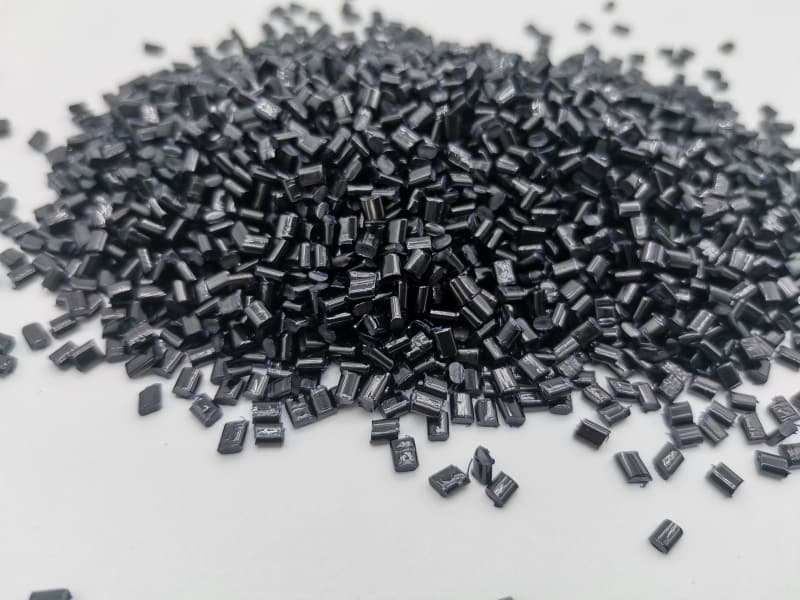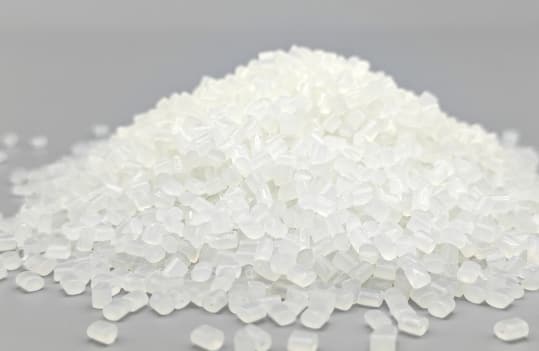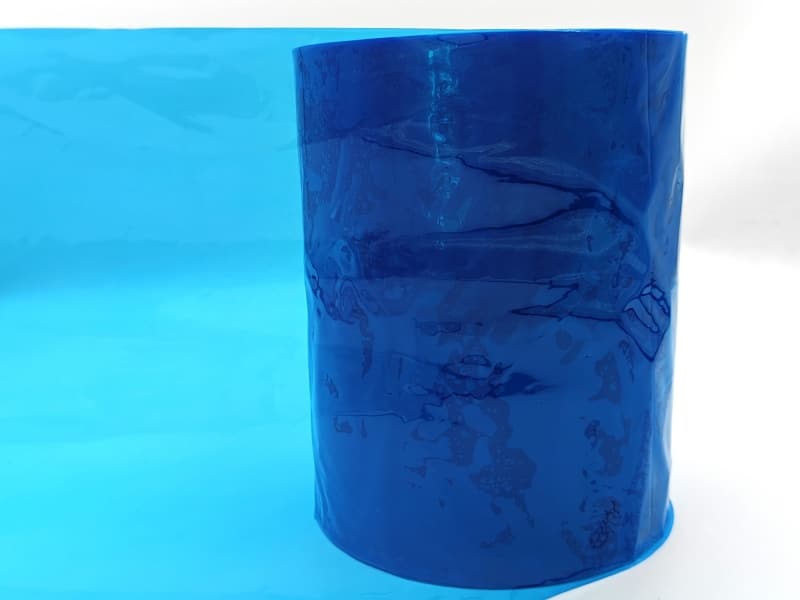
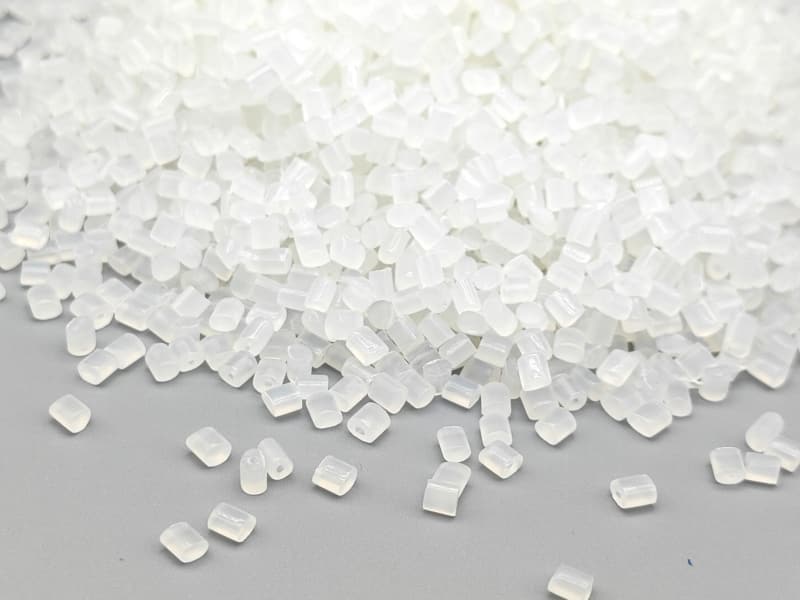
Most of the masterbatch issues may seem initially to be related to "unstable color" but after careful consideration, in most cases, the real problem will not be the colorant per se but rather an improper selection of the carrier resin.
For instance, the red colorant that works well in PP might work poorly in PET due to migration.
And a black masterbatch which disperses nicely in PE film might cause black specks and change in mechanical properties in PA injection molding.
So, when buying a masterbatch, the question to ask is not:
"Do you have this color?"
but rather:
"Does your carrier resin match my base resin?"
In case of technical staff, it will have an impact on dispersion, color, process stability, and performance of the finished product.
In this article, we will consider PP, PE, PET, PA, ABS, and TPU systematically in terms of compatibility, process temperature, dispersion, addition rate, cost of purchase, process itself, and quality control.
The following is the methodology you can apply right away when choosing the carrier for your color masterbatch.
1. Why Is the Carrier Resin the Most Overlooked Factor?
2. What Is a Masterbatch Carrier Resin?
3. What Does "Compatibility" Actually Mean?
10. Carrier Selection Summary Table
12. 6 Metrics Purchasing Staff Should Focus On
13. How Can Technical Staff Judge the Carrier?
14. Why "Same Pigment" Performs Differently
15. Is Higher-Concentration Always Better?
16. Different Applications, Different Carriers
17. When Can a Universal Carrier Be Used?
18. Don't Blame the Masterbatch First
19. Practical Carrier Selection Logic
20. What Should a Supplier Truly Provide?
Masterbatch is not a colorant "packed into plastic pellets."
A well-developed masterbatch usually consists of the following ingredients:
Pigment / dye
Carrier resin
Dispersant
Process additives
Others
Of all of them, the carrier resin defines the possibility of masterbatch "melting into" the final plastic blend.
It is like a cup of coffee.
Pigment – coffee powder. And the carrier resin - is water. In case of incorrect interaction between water and coffee powder, even the best-quality coffee powder will not produce an even result.
And the plastic process is similar.
In case of incompatibility of the masterbatch carrier with the base resin, one may observe:
Incomplete melting of masterbatch
Inadequate pigment dispersion
Migration (blooming)
Higher number of black or color spots
Higher number of gel particles
Changes of gloss
Deterioration of mechanical properties
Incorrect melt flow
Non-uniform color of the end product
That is why when choosing a color masterbatch, knowing the base resin and the process is more important than just comparing masterbatch prices.
The carrier resin of the masterbatch is the base polymer that carries the pigment, dispersant, and other additives.
Its function is to assist in the penetration of the pigment into the target polymer matrix in an even manner.
In simple words, the carrier resin is the transportation medium for the masterbatch.
It should do the following three things:
1. Encapsulate the Pigment Evenly
When producing the masterbatch, the pigment should get into the carrier resin in a high shear condition.
A good carrier resin assists in getting the full wetting and dispersion of the pigment.
2. Be Melted Easily During the Process
When the masterbatch gets into the injection molding machine, extruder, blown film or spinning machines, it should melt easily with the base resin.
If the melting properties of the carrier are significantly different from those of the base resin, there might be issues with the dispersion.
3. Have High Enough Compatibility with the Target Resin
This is the most important requirement.
The masterbatch cannot be used alone.
It constitutes only a few percent of the final part.
Quite often purchasing personnel believe that
"It is very easy to use PP masterbatch for PP, PET masterbatch for PET..."
Indeed, it is not that easy.
There are at least several aspects of compatibility:
3.1 Chemical Compatibility
Carrier and base resin should have good compatibility.
If there is low compatibility between these two components, a clear two-phase structure may appear.
This explains why some masterbatches have excellent results in laboratory tests but experience surface problems during production process.
3.2 Melting Temperature and Rheological Properties
Even if two materials are similar on the chemical level, if processing temperature and rheological properties differ too much, the process of dispersion may suffer from it.
Thus, for instance, if masterbatch melting temperature is high enough:
Viscosity of masterbatch is high
Masterbatch melts slower
Masterbatch MFR differs significantly from base resin one
All these factors can influence the final performance.
3.3 Polarity Difference
This is an important aspect that should be paid attention to while choosing masterbatch for engineering plastics such as PET and PA.
PP and PE are examples of non-polar polyolefin materials.
PET and PA have specific structures and polarity features.
So you cannot simply say:
"If this masterbatch can melt, it is okay."
This is just the beginning.
The question is:
Can it form a stable system after melting with the base resin?
PP is the most common resin used in masterbatch.
It is used in the following areas:
Injection molding
Film
Non-woven fabrics
Tape yarn
Home appliances
Automotive
Packaging
Consumer goods
Hence, PP masterbatch is also an advanced product in the market.
4.1 Which Carrier Should Be Used By PP?
For the PP-based products, the typical first choice is:
PP carrier resin.
In some cases, the polyolefin system which has good compatibility with PP can also be chosen.
While choosing, do not only see the 'PP carrier' tag. It is necessary to check:
MFR
Processing temperature
Final loading level
Injection molding or extrusion
Part thickness
Color strength
Surface needs
4.2 Can PP Injection Molding and PP Film Use the Same Masterbatch?
No, I would not recommend such practice.
For example:
PP Injection Molding
Pays more attention to the following aspects:
Color uniformity
Dispersion
Black specks
Flow lines
Surface gloss
Cycle time
PP Film pays more attention to the following aspects:
Dispersion
Gel particles
Migration
Film surface properties
Friction coefficient
Transparency
Stability during continuous production
So for the same PP, the different process may require different masterbatch formulation.
Film is another very big masterbatch market.
Some common PEs are:
LDPE
LLDPE
HDPE
MDPE
Despite belonging to the same polyethylene category, they don't have the same processability.
5.1 Why Is It Important for PE Film to Care About the Carrier?
For film applications, the percentage of adding masterbatches is usually quite low, but the film's thickness is just a few tens of microns.
Which leads to:
The slightest undispersed particle would become a defect.
So PE film masterbatch needs special attention about:
Pigment dispersion
Gel
Black speck
Fish eye
Surface defect
Migration
Blocking
COF (coefficient of friction)
It is particularly important for transparent/translucent films.
5.2 Could LDPE and LLDPE Be Added the Same Masterbatch?
Not necessarily, but you cannot consider that as default.
As long as the product does not require high appearance quality, a masterbatch within the same polyolefin family could fit for several PEs.
However, for
high-speed blown film
ultra thin film
high transparency film
high speed packaging film
high demanding agricultural film
I suggest you conduct a test run before mass production.
Because it is not "can they work or not", but:
Can they work steadily under your screw, temperature, shear and addition.
PET is such a typical system that you are not supposed to use the usual masterbatch at all.
It is commonly applied for:
PET bottle
PET sheet
Thermoforming
BOPET film
Polyester fiber
Filament
Packaging
The processing temperature of PET is normally much higher than the common PE and PP systems.
That means that the first issue to be resolved when using PET masterbatch is heat resistance.
6.1 What Should the PET Carrier Consider?
Main factors:
Heat stability
Pigment heat resistance
Pigment migration
Dispersibility
Moisture
Melting behavior
Influence on PET properties
When using PET masterbatch in PET spinning applications, even minor dispersing issues will impact the quality of the fiber production.
6.2 Why Is PET Sensitive to Moisture in Particular?
PET normally needs drying before being processed.
In case the moisture is not properly controlled, it may cause the hydrolysis to occur at high temperatures, thus causing the following consequences:
IV drop
Reduction of molecular weight
Changes of mechanical properties
Stability of spinning decline
This way, when buying PET color masterbatch, I would recommend that you ask not only the following question:
"What is your carrier?"
You should also ask:
"What is the moisture content of the master batch? In what form is it stored?"
These two questions are of great significance in PET applications.
PA Includes:
PA6
PA66
PA12
Plus other nylon systems
They are often used for:
Automotive applications
Industrial applications
Electrical goods
Fibers
Engineering plastics
One characteristic of PA systems is:
High process temperature, with processing conditions different in various PA grades.
As such, PA masterbatch should address:
Heat stability
Pigment stability
Dispersion
Moisture
MFR
Mechanical properties
7.1 Can PA6 and PA66 Masterbatch Be Used Interchangeably?
No, you cannot answer yes or no.
It depends on:
Specific PA grade
Processing temperature
Glass fiber
Flame retardant system
Molding cycle
Coloring target
Amount of masterbatch added
For systems, like PA66 + GF30, it is obvious that glass fiber affects melt flow and processing.
That is why, in engineering plastics project, I would usually recommend:
First choose the resin grade, then the masterbatch.
ABS is a commonly used engineering plastic, suitable for making:
Housings of household appliances
Interiors of automobiles
Electrical appliances
Consumer electronics
Tools
Toys
Injection molded products
ABS generally requires high color demands.
In particular:
Black
White
Grey
Silver
Custom colors
These colors are particularly susceptible to surface influences.
8.1 What Should ABS Masterbatch Concentrate on?
I would like to advise you on some aspects when purchasing ABS masterbatch.
The first one is Compatibility with Carrier
Don't run into troubles with inappropriate carrier:
Delamination
Migration
Change in gloss
Surface defects
The second aspect is Heat Stability
ABS injection molding temperature is usually higher than that of ordinary PE, so pigments and dispersion should have enough heat stability.
The third one is Dispersion
Generally, ABS products require high appearance quality.
If dispersion is not good, it may lead to:
Color spots
Black spots
Color streaks
Uneven gloss
Therefore, ABS color masterbatch can't be assessed based on only color matching.
The main difference between TPU (thermoplastic polyurethane) and polyolefin resins such as PP and PE is that TPU is more polar, and TPU processing temperatures, hardnesses, and applications are all over the map. As a result, TPU masterbatch cannot be chosen according to the principle of "If the colors match, they should work."
In terms of selecting a TPU product, I would generally advise procurement people to figure out the following three issues first:
Is it a polyester or polyether TPU?
Is it an injection-molded part, extruded, film, or spun TPU?
What is the processing temperature? Do you have any need for transparency, yellowing resistance, and migration resistance?
Answering these three questions will make your choice of masterbatch for TPU much more important than just looking at the price of colorants.
The very benefits of TPU also become reasons for its being "fussy" with regard to masterbatch.
TPU possesses high elasticity, resistance to abrasion and tearing, flexibility, and it can be manufactured in very soft up to quite stiff articles. For this reason, TPU finds applications in the following fields:
Phone cases and electronic accessory components
Automotive interior elements
Footwear materials
Films
Tubes
Medical products
Cables and wires
Industrial seals
However, in case of poor compatibility between masterbatch and the base polymer of TPU, the following issues can arise:
Poor dispersion results in color spots, color lines, and black spots.
Incompatible carrier results in migration, stickiness, and surface defects.
Mismatched processing temperature results in discoloration and degradation.
Lack of pigment stability results in color change after prolonged processing time.
Therefore, for TPU, "color has been made" does not qualify the masterbatch.
There is no universal carrier for all TPUs.
In general, it is better to focus on the compatibility of the carrier with the TPU resin itself, rather than on the colorant itself.
TPU Carrier
In case of high demands on material properties, transparency and aesthetics, I would recommend using a masterbatch based on TPU.
The main benefit here is the similarity of the carrier and base resin – they understand each other as any other members of one family do.
This approach is best for:
Transparent and semi-transparent TPU
High-class injection molding
TPU film
Flexible TPUs
Materials with high sensitivity to aesthetics
Can Any Other Carrier Be Used?
It is not mandatory to use 100% TPU carrier.
Sometimes compatibility can be enhanced using a special dispersion and carrier design. It requires testing of particular TPU grades with respect to temperature and addition rates.
Recommendation: be careful while buying if your supplier promises only the fact that "this masterbatch can be used for TPU".
When compared to common PP and PE masterbatches, the application of TPU normally calls for greater care with respect to the following parameters.
| Focus Parameter | Significance |
|---|---|
| Dispersion | Prevent color spots, stripes and local uneven coloration |
| Compatibility with the carrier | Preserve from migration, tackiness and surface imperfections |
| Heat resistance | Maintain from yellowing or degradation during processing |
| Durability | Satisfy needs for extended use in outdoor, automotive and shoe applications |
| Transparency | In case of transparent TPU – even more important |
| Migration | Affects surface condition and further processing |
| Consistency | Beware of color variations between the batches |
| Rate of addition | Impacts cost and performance of the finished product directly |
One easily overlooked issue:
The higher transparency of the TPU, the more significant become any problems of masterbatch.
In case of white, light-colored or transparent TPU, even small issues with dispersion can be noticed with a naked eye.
With TPU added, the core content can be summarized in the table below, which is very useful for purchasing staff:
| Resin | Recommended Carrier | Key Focus | Common Applications |
|---|---|---|---|
| PP | PP-compatible | Dispersion, heat resistance, migration | Injection molding, film, appliances |
| PE | PE-compatible | Dispersion, flow, weathering | Film, pipe, packaging |
| PET | PET-compatible | High-temp stability, dispersion, spinning stability | Fiber, film, bottle |
| PA | PA-compatible | High-temp stability, migration resistance, hydrolysis resistance | Automotive, engineering plastics, fiber |
| ABS | ABS-compatible | Heat resistance, dispersion, surface quality | Appliances, automotive, electronics |
| TPU | TPU-compatible | Compatibility, yellowing resistance, transparency, migration | Film, injection molding, shoe materials, automotive |
From the standpoint of the buyer, "the more similar the carrier resin to the base resin," does not necessarily hold true.
What must be determined is whether or not:
The carrier, pigment, dispersant, base resin, and process will yield a stable system.
This is also the reason that the exact same color performs so well in polypropylene but will yield entirely different results in thermoplastic polyurethane.
If this article intends to encompass both purchasing intent and technical intent regarding search, a purchasing checklist will be a great tool.
1. For which type of TPU is this masterbatch intended?
Do not take it for granted that it will be "universal for TPU."
It will be better to know more precisely:
Polyester-based or polyether-based?
TPU hardness?
For transparent TPU?
For film or injection molding?
2. What should be the addition ratio?
It is not just about costs, but also about physical properties of the final product, and its color.
If a supplier manages to obtain desired color with the lower addition ratio and good dispersion, it will be more valuable for purchasing.
3. What is the processing temperature?
In particular, for TPU injection molding and extrusion.
If the masterbatch has poor heat resistance characteristics, it may happen that everything seems fine during the initial stages, but afterwards:
Yellowing
Black spots
Color fading
Odor
Surface defects
4. Do you have actual application experience?
This is a point I believe that purchasing department should give a lot of attention to.
Color produced in laboratory is different from the color produced in actual production process.
Supplier having practical experience in manufacturing of TPU through injection molding, film making, extrusion and other processes using soft materials would definitely react quicker to the problems existing in production.
5. What methods do you apply to ensure consistency in color between batches?
It is extremely important for suppliers producing TPU in large volumes to be consistent in color between batches.
Do not be fooled by the first sample.
The things that you should actually pay attention to are:
Does the color remain stable in batches 1, 5 and 20?
6. Can you make changes to the current masterbatch formula in case of any problems?
This is an example of how the supplier's technical services differ.
A mature supplier should not only "sell" color number, but should also be able to make necessary adjustments depending on:
Resin → Process → Temperature → Addition Rate → Product Requirements
| Base Resin | Recommended Carrier Direction | Key Focus | Common Applications |
|---|---|---|---|
| PP | PP / compatible polyolefin | Dispersion, flow, surface | Injection molding, film, nonwoven |
| PE | PE / compatible polyolefin | Film dispersion, migration, gel | Blown film, packaging, pipe |
| PET | PET and adapted system | Heat resistance, moisture, dispersion | Bottle, sheet, film, fiber |
| PA | PA and adapted system | High temperature, dispersion, mechanical properties | Automotive, electronics, industrial parts |
| ABS | ABS adapted system | Surface, color difference, heat resistance | Appliances, automotive, electronics |
But this table can only serve as a first-step screening tool.
The real selection needs to go further.
This is a very common pitfall in actual purchasing.
Suppose Supplier A:
$3/kg
Supplier B:
$4/kg
A looks 25% cheaper.
But if:
A needs 5% addition
B needs only 2.5% addition
Then the final cost of use is completely different.
So what you should really calculate is:
Actual coloring cost per ton of finished product
The formula can be simply understood as:
Masterbatch Cost = Masterbatch Price × Addition Rate
For example:
A: $3/kg × 5% = $150/ton
B: $4/kg × 2.5% = $100/ton
On the surface, B has a higher unit price, but the final cost of use is actually lower.
First of all, I would not only request a quotation from the supplier.
I would require the supplier to provide at least the following information.
1. Carrier Resin
Just ask directly:
What is the carrier resin?
Accepting an answer such as "PP compatible" is not good enough.
2. Recommended Addition Rate
The addition rate has a direct impact on the price.
I would advise also requesting from the supplier:
Recommended addition rate
Maximum recommended addition rate
Addition rate for various colors
3. MFR / MFI
MFR is neither "the higher the better," nor "the lower the better."
What really matters is:
Does it fit your equipment and base resin?
4. Heat Stability
In particular,
PET
PA
ABS
Thermoplastics with high temperature resistance
This needs to be tested.
5. Dispersion
Do not test solely based on lab samples.
I would advise the supplier to test on the actual part.
A masterbatch which looks consistent when it's a pellet does not mean it performs consistently once it has been added to the final resin.
6. Batch-to-Batch Consistency
Batch consistency is critical in long-term purchasing, but it is frequently disregarded.
For large scale production companies:
The first part of matching color is easy; maintaining the consistency across several batches is the true supply capability.
In case of developing a new color, I would recommend to stick to the below sequence.
Step 1. Clarify the Base Resin
To be clarified:
PP?
LDPE?
LLDPE?
HDPE?
PET?
PA6?
PA66?
ABS?
Don't say to the supplier "plastic".
Step 2. Clarify the Processing Method
The same resin requires different solutions for different processing methods.
Such as:
Injection molding
Blown film
Cast film
Extrusion
Blow molding
Fiber spinning
Sheet extrusion
Step 3. Clarify the Processing Temperature
It is very important base for evaluation of the heat resistance level.
If the processing temperature is:
180°C or 280°C
Clearly, we cannot use the same pigment and dispersion system.
Step 4. Clarify the Product Requirements
For example:
Ordinary black bag and automotive interior part will have totally different masterbatch requirements.
Automotive interior will require:
High color fastness
Low VOC
Low migration
High dispersion
Batch consistency
While ordinary packaging item may require:
Price
Tinting strength
Basic dispersion
And this is the problem which baffles customers most when tested.
Because, for instance, two manufacturers both state:
"Our pigment is identical."
However, the outcome is entirely different.
The reasons could be due to:
Difference in pigment particle size
Difference in pigment surface treatment
Different dispersant
Different carrier resin
Difference in twin-screw geometry
Different shear
Different processing temperature
Different pigment concentration
Hence:
It is the pigment that gives the basis of the color; the formulation and dispersion technology decide the end result.
Which is why the quality of masterbatches cannot be measured just based on the pigment CI number.
Not necessarily.
From the point of purchasing, high concentration is very appealing.
For instance:
30% pigment masterbatch
Seems more advantageous compared to:
20% pigment masterbatch
However, the key issue is:
How stable will that 30% dispersion?
In case high concentration results to:
High viscosity
Pigment aggregation
Difficult dispersing
Increase in melt pressure
Color specks in the molded parts
Then high concentration might increase risk during the manufacturing process.
Therefore, my recommendation for the purchasing department is:
Efficient coloration cost + dispersion effectiveness + addition rate
Instead of just pigment concentration.
It is an extremely critical concept to consider in choosing the appropriate masterbatch.
Film
Important factors:
Excellent dispersibility
Minimal migration
Minimal gel formation
Surface stability
Coefficient of friction
Injection Molding
Important factors:
Good color uniformity
Thermal stability
Flow properties
Surface finish
Batch uniformity
Fiber
Important factors:
High dispersibility
Thermal stability at high temperatures
Filtering pressure
Spinning stability
Mechanical properties
Blow Molding
Important factors:
Dispersibility
Tinting strength
Melt stability
Appearance of parts
Therefore:
"The same resin" does not mean "the same masterbatch."
In some cases, there can be a more universal carrier system applied.
For instance:
Regular PE packaging
Regular PP injection molding
Non-critical everyday products
However, when your product has low demands on the visual appearance and performance, then universal carrier system will help to cut down your expenses.
But when you come across such industries as:
Automotive
Electronics
Medical
Food contact
High transparency film
High-speed spinning
High temperature engineering plastics
I would advise you not to apply the universal carrier system trying to save a few dollars on masterbatch.
And that's because the real cost lies here:
Downtime, scrap, and customer complaints.
In case of any color difference in the actual process, follow this troubleshooting process:
1. Is there any difference in the resin?
Different batches of resin may result in:
Difference in MFR
Difference in color tone
Difference in additives
2. Is there any consistency in the dosing ratio?
In case the manual weighing is not accurate, then naturally there would be a difference in color.
3. Is there any change in the process temperature?
Change in process temperature may impact:
Melting
Dispersion
Stability of the pigment
4. Is there any consistency in screw shear?
Particularly in extrusion and injection process.
5. Is there any consistency in the masterbatch batch?
Only in the end, you should look for the masterbatch.
This is also why a truly mature supplier will try to help the customer build a complete color matching and process control system, rather than just selling pellets.
If you do not want to memorize too much material knowledge, you can start by remembering this logic:
Step 1: Look at the base resin.
PP → PP system
PE → PE system
PET → PET-adapted system
PA → PA-adapted system
ABS → ABS-adapted system
Step 2: Look at the process.
Injection? Film? Extrusion? Fiber? Blow molding?
Step 3: Look at the temperature.
Low-temperature plastics and high-temperature engineering plastics cannot use the same heat resistance requirements.
Step 4: Look at the final product.
Ordinary products and automotive, electronics, medical, and food-contact products have completely different masterbatch requirements.
Step 5: Look at the actual test.
Theoretical compatibility is not the same as actual production compatibility.
Professional masterbatch supplier must know more than just telling their customers:
"This is a PP masterbatch."
Instead, they have to be aware of:
Grade of resin
Temperature of processing
Processing technique
Rate of addition
Thickness of product
Color specification
Surface specification
Regulation specification
Usage of product outside/inside
Then, to know:
Carrier + Pigment + Dispersant + Processing Technique
This is the true customized color masterbatch.
Masterbatch technology is far more than "pigment + resin."
For the same color, in different resins, we have to rethink:
Pigment selection
Pigment loading
Carrier compatibility
Dispersion system
Thermal stability
Processing range
In particular, for top-end products, the true challenge is not "make the color" but:
Make sure the color is consistent between batches and equipment, and over long run time periods.
In light of our practical development experience, after customers are in large-scale production, the focus changes from "Can you make the color?" to:
Why is the first batch OK, but the third batch began to change?
Why is there no problem in the laboratory, but there are color spots during large-scale production?
Why is there a color change when the supplier changes one batch of materials?
These questions are essentially related to the formulation system, raw material control, and production quality management.
These 8 questions can be asked directly to the supplier by the purchasing team.
1. What is the carrier resin?
Not to accept the answer "compatible with PP/PE".
2. What is the recommended addition rate?
To verify the actual cost of use.
3. What is the MFR?
To assess the compatibility.
4. What is the processing temperature?
To verify the heat resistant range.
5. What are the pigments used?
Especially when it comes to high-temperature and outside applications.
6. How do you control dispersion?
This is an essential question for assessing technical competence.
7. How do you control batch-to-batch consistency?
To see whether the supplier really has a quality control system.
8. Can you test it on our resin?
This is the most essential question.
As it should be understood that the reliable test must be carried out on our own resin.
The main idea that I would like you to remember from this article is:
Masterbatch for coloring is not a universal product which "works with any plastic."
Although PP, PE, PET, PA, ABS and TPU belong to thermoplastics, each of them has a different polarity, melting temperature, rheology, processing temperature window and end use application.
So, the correct order of selection of masterbatch should be:
Resin → Processing Technique → Processing Temperature → Carrier Resin → Pigments → Addition rate → End use performance
And not:
Color → Price → Order
For purchasing specialists, the proper choice of carrier will allow controlling the long-term cost and stability of supply. For technical specialists, the proper choice of carrier resin is the basis for dispersion, coloring, processing and end use performance.
If your product is an ordinary PP/PE component, then the universal approach could be applicable.
However, if your product includes automotive, electronics, medical devices, food contact, engineering plastics with a high service temperature, ultra-thin films, fibers and/or products with high transparency requirements, then I would recommend you to inform the supplier of masterbatch about your resin grade, processing temperature and manufacturing process before ordering.
The ideal masterbatch should not only be "the correct color".
It should be:
Compatible with your resin, compatible with your machinery, compatible with your process, and capable of running your process in a stable manner.
When you are choosing color masterbatch for PP, PE, PET, PA, ABS, TPU, or any other resin, you can provide us with your resin grade, process type, process temperature, required color, and recommended addition level. We will be able to assess the carrier resin and system formulation according to your real production environment.