In the field of plastics, the material selection affects the performance, cost and market competitiveness of the product directly. Now, high-performance polymers like engineering plastics are generally replacing traditional materials such as metals and ceramics. Next, we will comb out engineering plastics from basic concepts to actual selection, and help you make a more appropriate choice.
1. What Are Engineering Plastics and Why Can They Replace Metals?
2.1 General-Purpose Engineering Plastics: The "Big Five" of the Broadest Range of Applications
2.2 Special Engineering Plastics: the "Ace Expert" in the Field of High Performance
2.3 Cheat Sheet for Performance Comparison of Top Ten Engineering Plastics
4. Precautions for Purchasing and Processing of Engineering Plastics
4.1 Recommendation of Well-Known Engineering Plastics Brands
4.2 Brief Description of the Key Points of Injection Molding Processing
Engineering plastics refer to a category of plastics that can be used for a long time in a broad temperature range and under difficult circumstances. They hold crucial advantages in replacing metals since their light-weight nature, self-lubrication, corrosion resistance, high design freedom, and lower cost.
General-purpose plastics are characterized by their low cost and high volume production.So that they are used widely in daily items.On the contrary, engineering plastics are designed to replace metals and other materials, serving as load-bearing structural components.They can withstand both extremely high and very low temperatures, and their rugged nature allows them to operate reliably in environments where general-purpose plastics often fail.
When selecting a product's material, engineers often face to choose between metals and engineering plastics—a comprehensive trade-off involving performance, cost, and designation.
First of all, the engineering plastics' density is significantly lower than that of metals, which can substantially reduce products' weight. This contributes to save energy and enhances portability, just like laptops in devices.Secondly,the engineering plastics possess inherent erosion resistance, excepting the need for expensive anti-rust treatments such as electroplating, which metals often have.And also, many engineering plastics possess inherent self-lubricating properties, which makes them operate oil-free, more quietly, and help absorb shaking.At last, engineering plastics offer a high degree of design freedom and can form complex shapes in a single molding process. This makes multiple components to be merged into a single unit in just one step, reducing component count and cost.
However, there are many limitations among engineering plastics too. Even though their hardness and strength can be enhanced, they generally do not match that of high-performance metals. Their temperature of long-term using mostly ranges between 100°C and 260°C, only several specially plastics exceeding 300°C. Properties may degrade under prolonged UV exposure or heat, and they can deform slowly under constant load.
So, for those applications that need to remain absolute dimensional stability or require to be exposed in extremely environments over decades years,it's crucial to take a careful assessment for their stability.
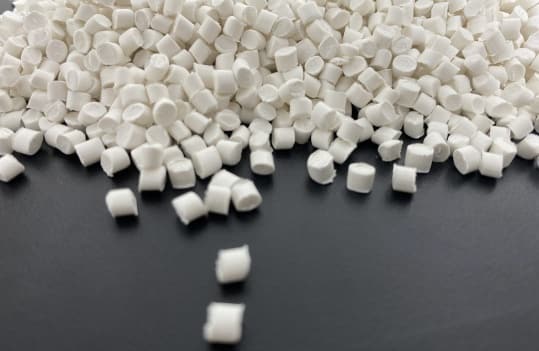
Engineering plastics are roughly divided into two main categories : general-purpose engineering plastics, specialty engineering plastics.
This type of plastics is renowned for its large-scale production capacity, extensive-scope application effects and cost-effectiveness, enabling it to satisfy the demands of industrial applications.
PA(nylon):
Features: wear-resistant, high toughness, self-lubricating.
Application: nylon gear, fishing line.
PC(polycarbonate):
Features: high strength, transparent, flame retardant.
Application: bulletproof glass, spectacle lenses, car lamp covers.
POM(polyoxymethylene):
Features: high rigidity, low friction.
Application: precision gears, buckles.
PBT(polybutylene terephthalate):
Characteristics: great electrical insulation, low absorption about water and can resist high temperature better,
Applications:Switches and electronic connectors.
PET(polyethylene terephthalate):
Characteristics:Similar to PBT, but can resist higher temperature better and has higher rigidity.
This type of material has ultimate performance and is more expensive to solve problems under extreme working conditions.
PSU/PES (polysulfone):
Properties: heat resistance, hydrolysis resistance, transparency, high mechanical properties.
Application: Medical sterilization equipment, food processing equipment
PPS (polyphenylene sulfide):
Features: Have extremely heat-resistant and flame-retardant.
Application: Engine peripheral parts.
PEEK (polyetheretherketone):
Features: "King of Plastics", best overall performance.
Applications: Medical implants, aerospace.
PTFE(Polytetrafluoroethylene):
Properties: Best chemical resistance, non-stick.
Applications: Non-stick coatings, seals.
LCP(liquid crystal polymer):
Features: Ultra-high strength, extremely dimensional stability.
Application: Miniature electronic connectors.
Material | Heat Resistance (︒C) | Mechanical Strength | Wear Resistance | Chemical Resistance | Cost |
PA | ★★★ | ★★★★ | ★★★★★ | ★★★ | ★★ |
PC | ★★★ | ★★★★ | ★★ | ★★★ | ★★★ |
POM | ★★ | ★★★ | ★★★★★ | ★★★ | ★★ |
PI | ★★★★★ | ★★★★★ | ★★★★★ | ★★★★ | ★★★★★ |
LCP | ★★★★ | ★★★★★ | ★★★★ | ★★★★ | ★★★★ |
★★★★ | ★★★★ | ★★★★ | ★★★★ | ★★★★ | |
PBT | ★★★★ | ★★★ | ★★★ | ★★★★ | ★★ |
PET | ★★★ | ★★★ | ★★★ | ★★★★ | ★★ |
PPS | ★★★★ | ★★★★ | ★★★★ | ★★★★★ | ★★★★ |
PEEK | ★★★★★ | ★★★★★ | ★★★★★ | ★★★★★ | ★★★★★ |
(Note: The more ★, the better the performance and the higher the cost)
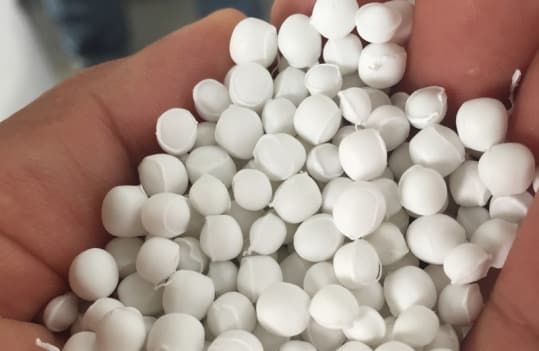
You can follow the steps below to select materials which you need, that can help you clarify your target materials better .
1. What is the required range of mechanical strength (impact, bending, tensile)?
2. What are the thermal requirements?
3. Will it be exposed to chemical substances (solvents, oil, sour, alkaline substance, or watery environment)?
4. Is wear resistance or self-lubricating required?
5. What are the budgeted target costs and are there any food contact medical or flame retardant certification requirements?
◆ Automobile manufacturing:
POM: door lock, window gear (self-lubricating, wear-resistant).
PBT: car lamp holder (heat-resistant, electrically insulating).
PA: engine cover (oil-resistant, heat-resistant).
PPS: Sensor (high temperature and chemical resistant).
◆ Electronics and electrical:
PBT: Connectors (electrical insulation, solder heat resistance)
LCP: Micro Connector (high flow, high precision).
PC: Shell (impact-resistant, beautiful).
◆ Medical equipment:
PC: dialyzer, blood oxygenator (transparent, sterilization resistant).
PEEK: surgical instruments, implants (sterilizable, biocompatible).
PEI: Re-sterilizable enclosure (resistant to high-temperature steam).
It's key for ensuring consistency and stability of material performance to choose a reputable brand.
Choosing a reputable brand is key to ensuring consistency and stability of material performance. The following are the four internationally renowned engineering plastics brands and their introductions. These brands represent the highest standards in the industry, providing not only basic materials but also innovative solutions.
Company | Core Features | Star Products and Brands | Market Positioning |
DuPont (USA) | Known for its strong R&D capabilities and innovation, it has many inventions and patents. High-end and special performance. Typically targeted at the most demanding industries such as automotive engine bays, aerospace, high-performance electronics and medical. | Zytel: One of the most famous nylon brands in the world, providing a variety of reinforced, toughened, and high-temperature resistant PA series products. Crastin: high performance PBT engineering plastic. Vespel: Super specialty plastic based on PI (polyimide) with ultimate performance and used in the most demanding working conditions. | High-end and special performance. Typically targeted at the most demanding industries such as automotive engine compartments, aerospace and medical fields. |
BASF (Germany) | The product line is extremely broad, ranging from basic chemicals to high value-added plastics, providing "one-stop" solutions. | LEXAN: One of the world's most well-known PC (polycarbonate) brands, known for its high impact resistance and transparency. VALOX/XENOY: PBT and its alloy products are commonly used in automotive exterior parts. ULTEM: Special engineering plastic based on PEI (polyetherimide), high temperature resistance, flame retardant, and high strength. | Comprehensive and reliable. With its huge scale and integrated industrial chain, BASF provides customers with stable, reliable and wide variety of engineering plastics choices. |
SABIC (Saudi Arabia) | Controlled by Saudi Aramco, it was formerly the plastics department of General Electric and inherited the strong technical foundation of GE Plastics. | lLEXAN: One of the world's most well-known PC (polycarbonate) brands, known for its high impact resistance and transparency. lVALOX/XENOY: PBT and its alloy products are commonly used in automotive exterior parts. ULTEM: Special engineering plastic based on PEI (polyetherimide), high temperature resistance, flame retardant, and high strength. | Technology and solutions driven. Especially in specific fields such as PC, PPO, and PEI, it has strong technical advantages and market influence, focusing on providing high-value engineering solutions. |
Polytech (Japan) | It is a joint venture established by a number of top Japanese chemical companies (such as Daicel, Mitsubishi Gas Chemical, etc.), focusing on engineering plastics and known for its high precision, high quality and consistency. | DURACON: The world's leading POM (polyoxymethylene) brand, favored by the precision industry for its extremely high dimensional stability and low wear characteristics. TOPAS: Cyclic olefin copolymer with extremely high transparency, low birefringence and excellent water vapor barrier properties. It is mainly used in pharmaceutical packaging and optical components. | Sophisticated and high-end. Polyplastics performs well in applications that require precision molding, dimensional stability and extremely high reliability (such as precision gears, medical equipment) and is the representative of "craftsman spirit" in the field of plastics. |
Different engineering plastics (such as PA that needs to be dried) have specific processing habits during processing. Ignoring them may cause the product to fail to achieve the expected effect.
PA: It easily absorbs moisture and must be fully dried before injection molding, otherwise it will cause foaming and reduced strength of the product.
PC: Sensitive to moisture and needs to be dried; high melt viscosity requires higher injection pressure.
POM: Poor heat stability, the process of temperature should not be too high, and the residence time should not be too long.
The selection of engineering plastics is an art of balance. Instead of memorizing these parameters, it is better to adopt the attitude of demand > performance > testing in material selection to find the most suitable material.
Q: Who have the highest abrasive performance during the engineering plastics that we konw?
A: They are PA (nylon) and POM (polyoxymethylene). Both of them have the highest performance.
Q: Between the PC and the PMMA (acrylic), which have better abrasion resistance?
A: PMMA is better than PC in the comparison between the wear resistance. But PC have better impact resistance.
Q: What is the price ranking of engineering plastics?
A: The prices from low to high are roughly as follows: general plastics (PA/PC/POM)
By reading this article, you may have known the key to material selection. The improvement of engineering plastic performance relies on high-quality color masterbatches,which is precisely where Standard color masterbatch exists.
Contact us for customized color masterbatch solutions:
• excellent color performance: High concentration, high coverage
• Outstanding dispersion: High color dispersion, preventing color differences and spots
•Good stability: Heat resistance, migration resistance
•Multi-material compatibility: Excellent compatibility without compromising raw material properties
• Full-process solutions
Let’s our products and services enhance your product competitiveness!