Plastic Bottles & Polymers: What Materials Really Make Up the Bottle in Your Hand?
What Are Plastic Bottles Made of? — A Brief Introduction to Plastic Bottles Materials
There are so many plastic bottles in our life. They are ubiquitous: on mineral water bottles, laundry detergent bottles. You'd be forgiven for mistaking them, but what they're constructed from is actually very different.
The material inside a plastic bottle really affects how safe the product is. It affects recyclability too. Most importantly, it determines what the bottle is used for. When you understand the properties of these materials, you can deal with plastic bottles far better. You might even reduce waste by making them last longer. And when you're choosing materials for products, you can choose what feels best.
Content:
What Are Plastic Bottles Made Of? — A Brief Introduction to Plastic Bottles Materials
1. Why Should We Understand Plastic Bottles Materials?
There are so many plastic bottles in our life. They are ubiquitous: on mineral water bottles, laundry detergent bottles. You'd be forgiven for mistaking them, but what they're constructed from is actually very different.
The material inside a plastic bottle really affects how safe the product is. It affects recyclability too. Most importantly, it determines what the bottle is used for. When you understand the properties of these materials, you can deal with plastic bottles far better. You might even reduce waste by making them last longer. And when you're choosing materials for products, you can choose what feels best.
2. The Most Commonly Used Raw Material of Plastic Bottles
By a brief introduction of the properties and tendencies of each type, you'll be better informed on which one is best for different plastic bottles.
2.1 Polyethylene Terephthalate (PET)
PET is currently the most widely used plastic bottle material. It has a series of advantages such as high transparency, light weight, good impact resistance, strong airtightness, and the ability to effectively prevent oxygen and carbon dioxide from entering or leaking. Besides, for its low production cost and recyclability. It is often used to make mineral water bottles, beverage bottles, and disposable plastic cups.
However, PET also has its drawbacks: It has a poor heat resistance. So don't use it to hold hot water or leave it exposed to sunlight for a long time.
2.2 High-Density Polyethylene (HDPE)
HDPE has a strong structure and resistance to acids, alkalis and moisture. Therefore, bottles made from it are strong, opaque, and have a long service time, making them suitable for liquid products that require leak-proof and contamination-proof protection. HDPE is one of the most common plastics used in household cleaning, chemical, and pharmaceutical packaging as a safe material.
In daily life, common laundry detergent bottles, medicine bottles, milk bottles, and cleaning agent containers are all made of HDPE.
2.3 Low-Density Polyethylene (LDPE)
Much like HDPE, LDPE also falls under another category of PE which explains its better extensibility as well as lower hardness compared to HDPE.
The demerit of such materials is that they are non-heat resistant and have low strength but are purposely made that way for flexibility in packaging liquid soaps (in the form of tubes or small-capacity bottles or squeeze face cream tubes) and small packaging bottles for detergent items.
2.4 Polypropylene (PP)
PP features excellent heat resistance and chemical stability. It resists boiling water and sterilization processes without any deformation. It also has nontoxic and odorless properties, which make it widely used in food or pharmaceutical products. It is one of the safest reusable plastics. PP is a material that is used for medicine bottles, hot-fill bottles, plastic water cups, bottle caps for baby products.
2.5 Polycarbonate (PC)
PC is a type of plastic characterized by high transparency, strength, impact and heat resistance, and other excellent mechanical properties.
Although it has excellent performance, it is also expensive, so it is mostly used in high-end durable products, such as water dispenser bottles, reusable plastic water bottles, large-capacity liquid storage containers, and chemical laboratory equipment.
2.6 Polyphenylene Sulfone (PPSU)
PPSU outperforms traditional PP and PC in many ways, with a more stable chemical structure, resulting in superior impact resistance and a higher operating temperature. Although its processing cost is higher, its excellent properties allow for repeated high-temperature and high-pressure sterilization, making it suitable for baby-safe containers, medical and laboratory supplies such as medical pipettes, reagent bottles, and injection parts.
If you see brown plastic containers in a laboratory or a baby product section of a shopping mall, they are very likely PPSU products.
2.7 Polylactic Acid (PLA)
PLA is a biobased material derived from corn starch or sugarcane and it is one of the biodegradable plastic. Because it is eco-friendly, it starts to be an alternative to regular plastic bottle.
However, its heat resistance and strength are so low that it is impractical for use in the long term or at high temperatures. At present, it is mainly used in disposable environmentally friendly packaging products, including eco-friendly tableware (bio-degradable tableware), "green" food packaging or the packaged fast food, milk tea cups and coffee cups, as well as other biodegradable beverage bottles.
3. Common Plastic Bottles and Their Main Materials
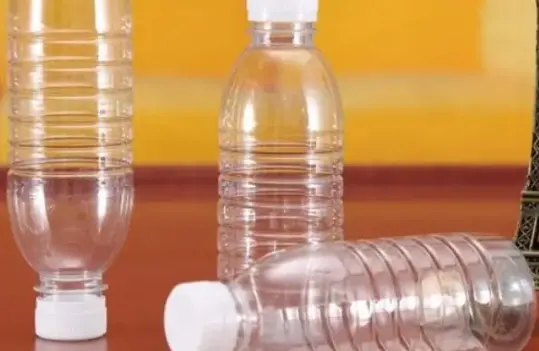
Now, let's see the main features of different plastic bottles from the perspective of specific applications.
| Bottle type | Plastic materials | Main features |
|---|---|---|
| Mineral water bottle | Polyethylene terephthalate (PET) | Clear, lightweight, airtight but not heat resistant |
| Medicine bottle | Polypropylene (PP) / High-density polyethylene (HDPE) | Acid-resistant, and can be heat sterilized |
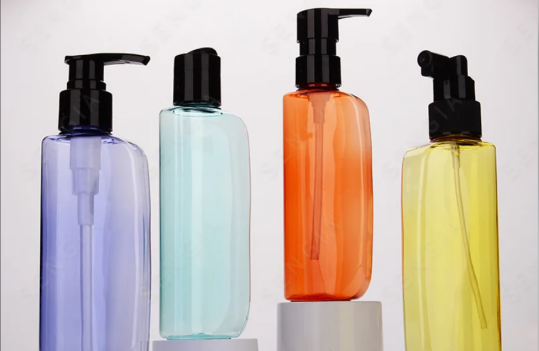
| Shampoo bottle | Polypropylene (PP) / High-density polyethylene (HDPE) | Chemical resistant and leak-proof |
| Laundry detergent bottle | High-density polyethylene (HDPE) / Low-density polyethylene (LDPE) | Solid structure; alkalis resistant and impact-resistant |
| Plastic water cup | PP / PC / PPSU | Heat resistant, reusable, and some models sterilizable |
You can see from the table, PET is used for the packaging of disposable beverage bottles, whereas HDPE is used to package chemicals and pharmaceutical products. PP is used in food packaging and reusable bottles, among others, where heat resistance is important; PC and PPSU offer more for applications requiring hygiene or durability.
4. Comparison of Plastic Bottles with Bottles Made of Other Materials
| Material type | Main features | Common Applications |
|---|---|---|
| Traditional plastic bottles (PET, PP, HDPE) | Lightweight, low cost, but its high-temperature stability is slightly lower. | Beverage bottles, shampoo bottles, medicine bottles, laundry detergent bottles, water cups |
| Biodegradable plastic bottles (PLA, etc.) | Good environmental performance, biodegradable, but low heat resistance and high cost of production. | Eco-friendly beverage bottles, disposable packaging |
| Glass bottle | High transparency, good chemical inertness and heat-resistance, not easily absorbing odors, yet brittle and heavy. | Fruit juice, alcoholic beverages, condiments, high-end cosmetics |
| Aluminum bottle | Lightweight, airtight, lightproof, and fully recyclable | Energy drink, beer, aerosol packaging |
| Stainless steel bottle | High temperature resistance, reusable, drop-resistant and durable, but with a higher cost. | Thermos flasks, sports water bottles, outdoor bottles |
In summary, there are obvious advantages of traditional plastic bottles like weight, cost, technology and transportation; while glass bottle and metal bottle are suitable for high-end products because they can be durable or has higher heat preservation. Furthermore, while biodegradable plastic bottles is relatively friendly to the environment, the actual performance and acceptation by the people are still in an early stage.
5. Conclusion
Plastic bottles differ because of the materials going into them. Each one serves its own purpose and spot. As a buyer or someone picking materials, knowing these helps. It leads to safer ways, more sustainable making too.
6. FAQs
Q1: Can Plastic Water Bottles Be Used for Many Times?
It varies. For something reusable many times, pick polypropylene (PP) or polycarbonate (PC) bottles. Watch out with beverage types like mineral water ones from polyethylene terephthalate (PET). They're designed for one go. So, avoid long-term use.
Q2: Which Plastics Are Food-Grade?
Most of them, in particular are polyethylene terephthalate (PET), polypropylene (PP), high density polyethylene (HDPE), Polyphenylene sulfone (PPSU) and polylactic acid (PLA).
According to the market standards, PP is the most cost-effective food-grade plastic globally; and PPSU is an upscale food-grade with strong resistance ability towards high-temperature sterilization and free of bisphenol A (BPA).
Q3: Which Type of Bottle Is More Environmentally Friendly?
You are inquiring about Polylactic
Conclusion
If you demand vibrant and stable colors for your plastic bottles, if you seek good pigment dispersion and migration resistance to ensure production consistency, and if you are committed to meeting food-grade compliance, long-lasting outdoor lightfastness, and color consistency across batches, then Standard is your trusted manufacturing choice.
Contact Standard for more information. Our engineers will design a customized masterbatch solution based on your specialized plastic bottle production needs.