Electronic protection films are a kind of functional film which protects the surface of mobile phones, tablet computers, television screens, automobile display systems and electronic elements. The cleanliness level, appearance uniformity and processing stability demanded are much stricter than what ordinary packaging films require.
The most important difference between them is not in thickness. It is: the whole manufacturing process involves the management of “micro defects.”
While ordinary packaging films may have some minor imperfections in appearance, the appearance of electronic protection films is almost perfect. Why? This is because an impurity only tens of micrometers large will be enlarged infinitely in the display screen.
When new customers begin working on developing Protective Film, they always ask: “Why are the requirements so tough?”
And the reason is very simple: protective film is not the final product; it is made to protect the final product.
This film protects the following types of products:
Glass for mobile phones
LCD monitors
OLED displays
Covering for camera lenses
Optical panels
Surfaces of stainless mirrors
Shiny plastics
There are virtually no defects in these products at all.
Hence, the protective film also must be perfect.
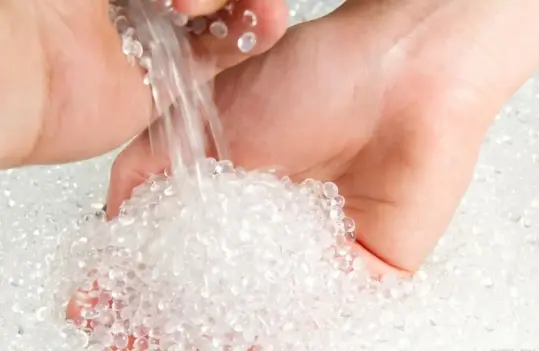
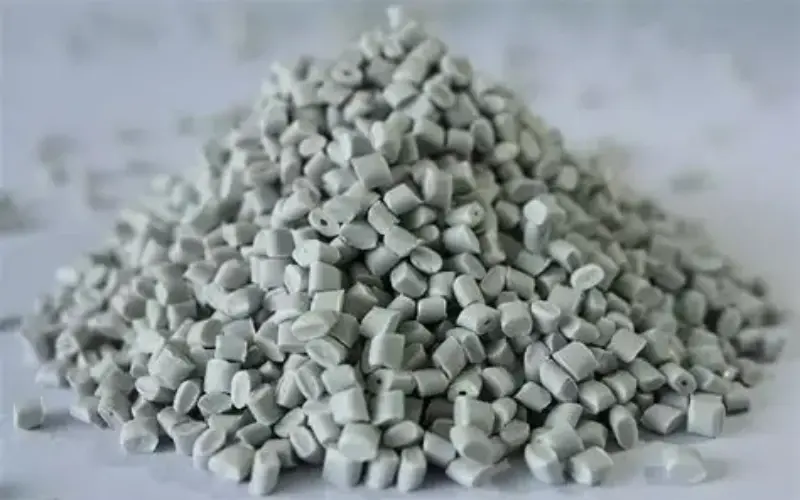
Imagine that the Masterbatch is like coffee in a cup.
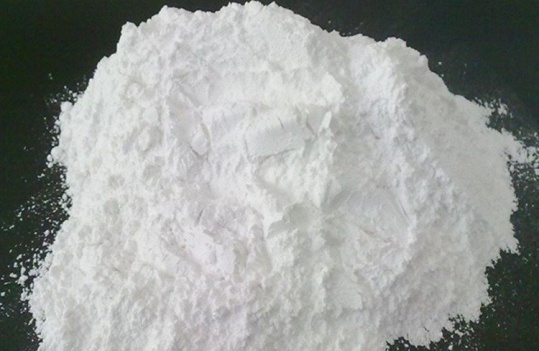
In this case, the pigment is like coffee powder.
The best Masterbatch is when all the coffee powder is dissolved in the water.
Not when there is residue.
In the case of protection films for electronics, any residual pigment particle results in:
Color spots
Black spots
Streaking
Optical defects
Based on the experience gained during the testing process, dispersion has an impact not only on color but also on the overall yield of the film roll.
It is often assumed that just having the right colors will suffice.
However, the key issue here is migration.
Migration of low molecular weight additives in the masterbatch into the surface of the film will result in various issues:
Rainbow effect
Oily appearance
Sticky surface
Low adhesiveness
Low adhesion property
In case of electronic protective films, such defects can seldom be rectified.
These defects will have to be scrapped.
This explains why Low Migration has been one of the most crucial criteria in evaluating Protective Film Masterbatch.
Crystal Points are considered one of the most frightening defects in the protective film industry.
They can be compared to sand grains within a piece of glass.
They may not be visible at first glance.
However, after being installed on the surface of glass of the phone, the defect becomes more evident.
Some common causes for Crystal Points are:
Contamination of raw materials
Improper mixing of masterbatch
Migration of additives
Degradation during processing
Improper melt filtering
This is the reason why an absolutely top-notch production line for the electronic protective film industry is capable of controlling not only the machines but even all raw materials used.
The greatest fear of the electronics industry is not having one good run of products.
It is having good runs consistently throughout the year.
One protective film factory alone may buy hundreds of tons of Masterbatch annually.
If there is any difference in the color, flow characteristics, and dispersion capability between batches, it will affect the consistency of its end products.
Thus, batch to batch consistency has become an important criterion in the electronics supply chain.
| Comparison Item | PP Protective Film | PE Protective Film |
|---|---|---|
| Base Material | PP (Polypropylene) | PE (Polyethylene) |
| Flexibility | Relatively low; higher rigidity | Excellent flexibility; high elongation |
| Transparency | High; smooth surface finish | Good, but slightly lower than PP |
| Heat Resistance | Higher; suitable for elevated processing temperatures | Relatively low; suited for medium to low temperature applications |
| Dimensional Stability | Excellent; minimal deformation | Fair, but more affected by temperature |
| Common Processes | Cast Film, Blown Film | Primarily Blown Film; Cast Film also possible |
| Typical Applications | Optical protective films, LCD/OLED protective films, electronic component surface protection | Stainless steel sheets, aluminum sheets, glass, home appliances, building materials, automotive sheet protection |
| Masterbatch Requirements | High dispersion, crystal point free, low migration, stable color difference | Low migration, high dispersion, weather resistance, batch consistency |
| Common Quality Risks | Crystal points, flow marks, color difference, optical defects | Migration, color difference, insufficient weather resistance, surface migration |
| Cost | Relatively higher | Relatively lower |
| Application Scenarios | Electronics industry with extremely high appearance and optical performance requirements | Large-area industrial protection and shipping protection |
Many problems are actually not caused by the material itself.
They are amplified by the process.
Characteristics:
Bidirectional stretching
Longer melt residence time
Therefore, it is more likely to amplify:
Dispersion issues
Crystal points
Color differences
Characteristics:
Fast cooling
High gloss
Greater focus on:
Surface smoothness
Flow marks
Streaks
Optical consistency
That is why the same Masterbatch may perform completely differently under different processes.
Most companies initially inspect the following:
The Extruder
Die Head
Temperature
Screw
However, based on our extensive experience, once the equipment settings become reasonably consistent, the factor that ultimately impacts the quality of the protective film is often the Masterbatch.
As it directly influences:
Dispersion of the pigment
Presence of crystal points
Migration
Effect on the melt flow
Black specks
Batch consistency over time
Or to put it simply, the high-quality Protective Film Masterbatch is not only about color but defines the processing window and the yield of the film as well.
If there is anything that I could advise the procurement professionals, it is always these things in the following sequence:
If it has been designed for blown film or cast film applications
If it is a high dispersion product
If it has been tested for low migration
If it manages crystal point concerns
If it ensures long-term consistency of batches
If it works for different resins (PE, PP, etc.)
If it can give processing test information rather than samples of colors.
In the electronics industry, price does not usually matter much. It is stability which influences the costs.
As consumer electronics, energy vehicle display panels, flexible screens, and precise manufacturing become the norm, the following will be expected from the protective film materials:
Higher cleanliness
Reduced VOCs
Lower migration
Improved transparency
Strict color matching
Environmentally-friendly additive systems
That is to say that for the future, it will not only be necessary for Protective Film Masterbatch to add color but also processability, stability, and compliance with environmental regulations.
When competing in the arena of electronic protective films, there is not only competition between equipment but also between material systems.
Any good Protective Film needs a good material design that combines the use of resins, additives, processing technology, and Masterbatch. For enterprises aiming to enhance yield rates, lower crystal points, and cut down migrations, the selection of proper material system will play a much better role than tweaking of equipment parameters.
If you are designing any high-end functional film like PP Protective Film, PE Protective Film or others, you should start from taking a second look at all the details on the side of material selection.